The documents in the case of Phyllis Newcombe
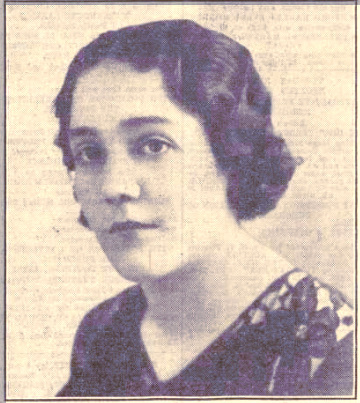
Collected by Jan Willem Nienhuys, with the help of Mike Hutchinson,
Clare and Ian Martin, Scott Campbell, Marcel de Jong, Ed Oomes, Joe Nickell,
Ranjit Sandu, Margareth Schroth, Dennis K. Lien, Mike Ashley, Andy Sawyer,
Henriëtte de Brouwer and Edna Newcombe.
Note that the sensationalist literature almost exclusively relies on reference II-5,
but that almost 40 articles listed here were about the story.
If any reader knows of more sources containing stories about
Phyllis Newcombe and/or Maybelle Andrews, please contact janwillemnienhuys@gmail.com.
Texts of 1938 newspapers are verbatim copied,
including typos and dubious style
(marked with [sic]), line breaks etc.
entry of death (immediately below)
Newspaper articles
Essex Chronicle, 2 September 1938. Reference I-29.
Essex Weekly News, 2 September 1938. Reference II-1
Essex Chronicle, 16 September 1938. Reference I-8.
Essex Weekly News, 16 September 1938. Reference II-3
Daily Telegraph, 20 September 1938. Reference II-5
Essex Chronicle, 23 September 1938. Reference I-21
Essex Weekly News, 23 September 1938. Reference II-4
Sensationalist literature
E.F. Russell, Tomorrow, May 1942
E.F. Russell, Fate, December 1950
(= March 1955, UK edn.)
E.F. Russell, Great World Mysteries, 1957
Allan W. Eckert, True, 1964
Emile C. Schurmacher, Strange Unsolved Mysteries, 1967
Emile C. Schurmacher, in: Strange Stories, 1976
Vincent H. Gaddis, Mysterious Fires and Lights, 1967
Colin Wilson, The occult, 1971
I. Sanderson, Investigating the unexplained, 1972
Michael Harrison, Fire from Heaven, 1976/1978
Fortean Times 16, review of Fire from Heaven, 1976
R.J.M. Rickard, Fire from Heaven – A Critique, 1977
Evening News, 4 February 1978
Reader’s Digest, Mysteries of the Unexplained, 1982
Lynn Picknett, Flights of Fancy?, 1987
Randles & Hough, Spontaneous Human Combustion, 1992
Larry Arnold, Ablaze!, 1995
Nigel Blundell, Fact or Fiction? Supernatural, 1996
entry of death
(The details are hand written from left to
right in cells.)
When and where died:
Fifteenth
September
1938
The Chelmsford
& Essex Hospital
Chelmsford.
Name and surname:
Phyllis
Maud
Newcombe
Sex:
Female
Age:
22
years
Occupation:
5 Bishop Road
Chelmsford (undecipherable)
Spinster
Shop Assistant
Daughter of George
Cyril Newcombe
cycle Dealer
Cause of death:
Heppostatic Pneuomona
following burns
Clothing caught fire
for reason unknown
Accident (undecipherable, possible “PM”)
Signature, description and
resident of informant:
Certificate received
from R A Beccle
Coroner for Southern
District of Essex
inquest held
19 September 1938
When registered:
Nineteenth
September
1938
Signature of registrar:
Fred
(undecipherable)
I. Newspaper articles concerning the Phyllis Newcombe
case retrieved from the British Newspaper Archive in December 2020.
Many articles on the inquest are slight variations of a single text,
namely references 2, 3, 4, 5, 6, 7, 11, 12, 13, 14, 15, 18, 18A,19, 22, 28;
a more redacted version is 16, 17, 31
A very extensive version is reference 20/21.
A star * means that the source was used for the article in Skepter 13.1 (2000)
I-1. The Western Gazette – Friday 23 September 1938
page 13, column 5
Mystery of Dance Tragedy.
Tests to discover how a girl’s dress could
have been ignited were made at a Chelms-
ford inquest on Miss Phyllis Newcombe,
aged 22, of Chelmsford, whose frock caught
fire at a dance hall, causing burns from
which she died. The Coroner, recording a
verdict of accidental death, on Monday,
saig the case was the most mysterious in
his experience.
I-2. The Nottingham Journal – Tuesday 20 September 1938
page 5. column 7
Girl’s Dance Dress in Flames
TRAGIC SCENE AT
MIDNIGHT
CAUSE UNEXPLAINED AT
INQUEST
CIGARETTE END
THEORY
At midnight, with her dance
dress in the old crinoline
style sweeping the floor, a girl
was leaving the ballroom where
she had spent a happy evening
with her fiance.
Suddenly she screamed. Though no-
body was standing near, her dress had
caught alight, and she was enveloped in
flames.
“From all my experience I have never
come across a case so very mysterious
as this,” said the Coroner, Mr. L. F.
Beccle, at the inquest at Chelmsford
yesterday.
The girl, Miss Phyllis Maude New-
combe (22), Chelmsford, died in hospital
from burns.
HEARD A SCREAM
Henry McAusland, of Romford, the
girl’s fiance, said that together they
went to a dance at Chelmsford Shire
Hall on 27 August arranged by the
Chelmsford City Football Club.
The girl was wearing a dress of white
net over satin.
“As we were coming out the ball-
room about midnight,” he went on, “I
was a little in front of Phyllis when I
heard her scream, and looking round I
saw her enveloped in flames.
“Nobody was near her at the time she
burst into flames.
“I formed the opinion that a care-
less person must have thrown away a
cigarette end which must have come
in contact with the dress.”
He and others put the flames out.
Herbert G Jewell, a director of the
Chelmsford City F.C., who helped to
extinguish the flames, said he did not
notice any cigarette ends near the girl.
EXPERIMENT IN COURT
The girl’s father, Mr. George New-
combe, produced a piece of material of
which the girl’s dress was made, and
the Coroner applied his cigarette lighter
to it and the material immediately
flared.
The father then lit a cigarette and
applied the lighted end to the material
but it did not ignite.
The Coroner adjourned the inquest for
a few minutes in order to visit the ball-
room, a few yards away, and on his
return said that he could not see how a
cigarette end could have been thrown
from the balcony of the ballroom.
Inspector Parrott said that the St. John
Ambulance was called at 12.15 a.m. and
arrived at 12.35. The town had no
borough ambulance.
The Coroner: I have the greatest re-
gard for the St. John Ambulance, but if
this is the only available service for the
town, it is a matter for the inhabitants
to see into.
The Coroner returned a verdict of
“ Accidental death,” and said that the
girl’s dress undoubtedly caught fire, but
from some reason unknown.
I-3. Portsmouth Evening News – Monday 19 September 1938
At that time this publication was titled The Evening News
page 6, column 3
MIDNIGHT DANCE
TRAGEDY
“ So Very Mysterious ”
FIANCE SEES GIRL IN
FLAMES
With her dance dress in the old
crinoline style sweeping the floor, a girl
was at midnight leaving the ballroom
where she had spent a happy evening
with her fiance.
Suddenly she screamed. Though no-
body was standing near, her dress had
caught alight and she was enveloped in
flames.
“ From all my experience, I have never
come across a case so very mysterious
as this,” said the Coroner, Mr. L. F.
Beccle, at the Chelmsford inquest to-day.
The girl, Miss Phyllis Maude New-
combe (22), of Bishop Road, Chelmsford,
died in hospital from burns. Henry
McAusland, of Linden Street, Romford,
the girl’s fiance, said that together they
went to dance at Chelmsford Shire
Hall on August 27, arranged by the
Chelmsford City Football Club. The
girl was wearing a dress of white net
over satin.
FIANCE’S THEORY
“As we were coming out of the ball-
room about midnight,” he went on, “ I
was a little in front of Phyllis when I
heard her scream, and looking round I
saw her enveloped in flames. “ Nobody
was near her at the time she burst into
flames. I formed the opinion that a
careless person must have thrown away
a cigarette end which must have come
in contact with the dress.”
He and others put the flames out.
Herbert G. Jewell, a director of the
Chelmsford City F.C., who helped to
extinguish the flames, said that he did
not notice any cigarette ends near the
girl.
The ambulance was long time
coming but he thought they did their
best under the circumstances.
The girl’s father, Mr. George
Newcombe, produced a piece of material
of which the girl’s dress was made, and
the Coroner applied his cigarette
lighter to it and the material imme-
diately flared.
The father then lit a cigarette and
applied the lighted end to the material,
but it did not ignite. He said that he
had soaked a similar piece of material
in petrol and had applied a lighted
cigarette end to it, but it had not
ignited even then.
CORONER AND AMBULANCE
The Coroner adjourned the inquest
for a few minutes in order to visit the
ballroom a few yards away, and on his
return said that he could not see how a
cigarette end could have been thrown
from the balcony of the ballroom.
Inspector Parrott said that the St.
John Ambulance was called at 12.15 a.m.
and arrived at 12.35. The town had no
borough ambulance.
The Coroner: I have the greatest re-
gard for the St. John Ambulance, but
if this is the only available service for
the town, it is a matter for the
inhabitants to see into.
The Coroner returned a verdict of
“ Accidental death,” and said that the
girl’s dress undoubtedly caught fire, but
from some reason unknown.
I-4. The Yorkshire Evening Post – Monday 19 September 1938
page 9 column 2
GIRL’S DANCE DRESS
CAUGHT FIRE
FIANCE TRIES TO PUT
OUT FLAMES
“So Very Mysterious” Says
Coroner
At midnight, with her dance dress in
the old crinoline style sweeping the
floor, a girl was leaving the ballroom
where she had spent a happy evening
with her fiance. Suddenly she
screamed. Though nobody was stand-
ing near, her dress had caught alight,
and she was enveloped in flames.
“From all my experience I have
never come across a case so very
mysterious as this,” said the Coroner
(Mr. L. F. Beccle) at a Chelms-
ford inquest to-day.
The girl, Miss Phyllis Maude New-
combe (22), of Bishop Road, Chelms-
ford, died in hospital from burns.
Henry McAusland, of Linden Street, Rom-
ford, the girl’s fiance, said that together
they went to a dance at Chelmsford Shire
Hall on August 27 arranged by the Chelms-
ford City Football Club. The girl was wear-
ing a dress of white net over satin.
“ We were coming out the ballroom
about midnight,” he went on. “ I was a
little in front of Phyllis when I heard her
scream, and looking round I saw her
enveloped in flames.
“Nobody was near her at the time she
burst into flames. I formed the opinion that
a careless person must have thrown away
a cigarette end which must have come in
contact with the dress.”
Witness said he and others put the flames
out.
Coroner’s Experiments
Herbert G. Jewell, a director of the
Chelmsford City F.C., who helped to extin-
guish the flames, said he did not notice any
cigarette ends near the girl. The ambulance
was a long time coming, but he thought
they did their best under the circumstances.
The girl’s father, Mr. George Newcombe,
produced a piece of material, of which the
girl’s dress was made, and the Coroner
applied his cigarette lighter to it and the
material immediately flared.
The father then lit a cigarette and
applied the lighted end to the material but
it did not ignite. He said that he had soaked
a similar piece of material in petrol and
had applied a lighted cigarette end to it,
but it had not ignited even then.
No Borough Ambulance
The Coroner adjourned the inquest for a
few minutes in order to visit the ballroom
a few yards away, and on his return said
that he could not see how a cigarette end
could have been thrown from the balcony
of the ballroom.
Inspector Parrott said the St. John
Ambulance was called at 12.15 a.m. and
arrived at 12.35. The town had no borough
ambulance.
The Coroner: I have the greatest regard
for the St. John Ambulance, but if this is
the only available service for the town it is
a matter for the inhabitants to see into.
“Some Reason Unknown”’
The Coroner returned a verdict of “Acci-
dental death ” and said the girl’s dress
undoubtedly caught fire, but from some
reason unknown.
I-5. Dundee Courier – Tuesday 20 September 1938
At that time this publication was titled Courier and Advertiser
page 3. column 2 (text identical to reference I-28, except captions)
GIRL IN FLAMES
AT DANCE
TRAGEDY PUZZLES
CORONER
At midnight, with her dance dress in
the old crinoline style, sweeping the floor,
a girl was leaving the ballroom where she
had spent a happy evening with her
fiance. She screamed. Though nobody
was standing near, her dress had caught
alight, and she was enveloped in flames.
“ From all my experience I have never
come across a case so very mysterious as
this,” said the Coroner, Mr. L. F. Beccle,
at the Chelmsford inquest yesterday.
The girl, Miss Phyllis Maude Newcombe
(22), of Bishop Road, Chelmsford, died in
Hospital from burns.
Henry M‘Ausland, of Linden Street,
Romford, the girl’s fiance, said that to-
gether they went to a dance at Chelmsford-
shire Hall on August 27 arranged by
Chelmsford City Football Club. The girl
was wearing a dress of white net over satin.
“ As we were coming out the ballroom
about midnight,” he went on, “ I was a
little in front of Phyllis when I heard her
scream, and, looking round I saw her en-
veloped in flames.
“ Nobody was near her at the time she
burst into flames. I formed the opinion
that a careless person must have thrown
away a cigarette end, which must have
come in contact with the dress.”
CORONER’S TEST.
Herbert G Jewell, a director of the
Chelmsford City F.C., who helped to ex-
tinguish the flames, said he did not
notice any cigarette ends near the girl.
The girl’s father, Mr George Newcombe,
produced a piece of material, of which the
girl’s dress was made, and the Coroner
applied his cigarette lighter to it and the
material immediately flared.
The father then lit a cigarette and applied
the lighted end to the material, but it did
not ignite. He said that he had soaked a
similar piece of material in petrol and had
applied a lighted cigarette end to it, but it
had not lighted even then.
The Coroner adjourned the inquest for a
few minutes in order to visit the ballroom
a few yards away, and on his return said
that he could not see how a cigarette end
could have been thrown from the balcony of
he ballroom.
Inspector Parrott said that the St John’s
ambulance was called at 12.15 a.m. and
arrived at 12.35. The town had no borough
ambulance.
The Coroner–I have the greatest regard
for the St. John’s ambulance, but if this
is the only available service for the town it
is a matter for the inhabitants to see into.
The Coroner returned a verdict of acci-
dental death, and said the girl’s dress
undoubtedly caught fire, but from some
reason unknown.
I-6. Sunderland Daily Echo and Shipping Gazette – Monday 19 September 1938
At the time the publication was titled The Sunderland Echo and Shipping Gazette
page 10. Column 5
DANCE HALL
TRAGEDY
Girl’s Dress Which
Caught Fire
“MYSTERIOUS CASE,”
SAYS CORONER
WITH her dance dress in the old
crinoline style sweeping the floor,
a girl was leaving the ballroom where
she had spent a happy evening with her
fiancé. Suddenly she screamed, though
nobody was standing near. Her dress
had caught alight, and she was enveloped
in flames.
“From all my experience I have never
come across a case so very mysterious
as this,” said the Coroner (Mr. L. F.
Beccle) at the inquest at Chelmsford
to-day.
The girl, Miss Phyllis Maude New-
combe (22), of Bishop Road, Chelmsford,
died in hospital from burns.
Henry McAusland, of Linden Street,
Romford, the girl’s fiancé, said that
together they went to a dance at Chelms-
ford Shire Hall on August 27, arranged
by Chelmsford City Football Club. The
girl was wearing a dress of white net
over satin.
“ We were coming out of the ballroom
about midnight,” he went on, “I was a
little in front of Phyllis when I heard
her scream, and looking round saw her
enveloped in flames.
“ Nobody was near her at the time she
burst into flames. I formed the opinion
that a careless person must have thrown
away a cigarette end, which must have
come in contact with the dress.” He
and others put the flames out.
Herbert G. Jewell, a director of the
Chelmsford City F.C., who helped to
extinguish the flames, said he did not
notice any cigarette end near the girl.
The ambulance was a long time in
coming but he thought they did their
best under the circumstances.
WHAT TWO TESTS REVEALED
The girl’s father, Mr. George New-
combe, produced a piece of material of
which the girl’s dress was made and the
Coroner applied his cigarette lighter to
it and the material immediately flared.
The father then lit a cigarette and
applied the lighted end to the material
but it did not ignite. He said that he had
soaked a similar piece of material in
petrol and had applied a lighted
cigarette end to it, but it had not
ignited even then.
The Coroner adjourned the inquest
for a few minutes in order to visit the
ballroom a few yards away, and on his
return said that he could not see how a
cigarette end could have been thrown
from the balcony of the ballroom.
Inspector Parrott said that the St. John
Ambulance was called at 12.15 a.m. and
arrived at 12.35. The town had no
borough ambulance.
The Coroner: I have the greatest
regard for the St. John Ambulance, but
if this is the only available service for
the town it is a matter for the
inhabitants to see into.
The Coroner returned a verdict of
“Accidental death,” and said that the
girl’s dress undoubtedly caught fire, but
from some reason unknown.
I-7. Hartlepool Northern Daily Mail – Monday 19 September 1938
|At the time this publication was titled Northern Daily Mail
page 5, column 7
GIRL’S BLAZING
DRESS
Dance Tragedy
INQUEST TESTS ON
MATERIAL
AT midnight, with her dance dress
in the old crinoline style sweeping
the floor, a girl was leaving the ball-
room where she had spent a happy
evening with her fiancee.
Suddenly she screamed. Though
nobody was standing near, her dress
had caught alight, and she was
enveloped in flames.
“From all my experience I have never
come across a case so very mysterious
as this,” said the Coroner (Mr. L. F.
Beccle) at the Chelmsford inquest
to-day.
The girl, Miss Phyllis Maude New-
combe (22), of Bishop Road, Chelms-
ford, died in hospital from burns.
Henry McAusland, of Linden Street,
Romford, the girl’s fiance, said that
together they went to a dance at
Chelmsford Shire Hall on August 27
arranged by the Chelmsford City Foot-
ball Club. The girl was wearing a dress
of white net over satin.
“We were coming out of the ballroom
about midnight,” he went on, “I was
a little in front of Phyllis when I heard
her scream, and looking round I saw
her enveloped in flames.
“Nobody was near her at the time.
“I formed the opinion that a careless
person must have thrown away a
cigarette end, which must have come in
contact with the dress.”
He and others put the flames out.
Herbert G. Jewell, a director of the
Chelmsford City F.C., who helped to
extinguish the flames, said he did not
notice any cigarette ends near the girl.
The ambulance were a long time
coming but he thought they did their
best under the circumstances.
The girl’s father, Mr. George New-
combe, produced a piece of material
of which the girl’s dress was made,
and the Coroner applied his cigarette
lighter to it and the material
immediately flared.
TEST WITH CIGARETTE END
The father then lit a cigarette and
applied the lighted end to the material
but it did not ignite. He said that he had
soaked a similar piece of material in
petrol and had applied a lighted
cigarette end to it, but it had not
ignited even then.
The Coroner adjourned the inquest for
a few minutes in order to visit the
ballroom a few yards away, and on his
return said that he could not see how a
cigarette end could have been thrown
from the balcony of the ballroom.
Inspector Parrott said that the St. John
Ambulance was called at 12.15 a.m. and
arrived at 12.35. The town had no
borough ambulance.
The Coroner: I have the greatest
regard for the St. John Ambulance, but
if this is the only available service for
the town it is a matter for the inhabi-
tants to see into.
The Coroner returned a verdict of
“ Accidental death,” and said the girl’s
dress undoubtedly caught fire, but from
some reason unknown.
*I-8. Chelmsford Chronicle – Friday 16 September 1938
At the time this publication was titled The Essex Chronicle
page 10, column 1
YOUNG WOMAN DIES
BURNED AT SHIRE HALL DANCE
Miss Phyllis Newcombe, aged 22, of Bishop
Road, Chelmsford, died in Chelmsford Hos-
pital yesterday, following severe burns she
received at a dance in the Shire Hall, Chelms-
ford, on August 27 last. Miss Newcombe had
left the ball room, and was descending the
main staircase, when her dress apparently
became ignited by the throwing down of a
lighted match or cigarette end, and burst into
flames. Several people at the dance went to
her assistance, and wrapped coats around
her. The flames were smothered, but Miss
Newcombe sustained severe burns on the legs
and body.
The deceased was the daughter of Mr. and
Mrs. G. Newcombe, of 5 Bishop Road,
Chelmsford. She had been managing a con-
fectionery business, belonging to her father,
in New Street, Chelmsford.
The inquest on Miss Newcombe will be
held in the Shire Hall, Chelmsford, on Mon-
day at 11 a.m.
I-9. The Essex Newsman – Saturday 17 September 1938
Page 1, column 5
YOUNG WOMAN DIES
BURNED AT SHIRE HALL DANCE
Miss Phyllis Newcombe, aged 22, of Bishop
Road Chelmsford, died in Chelmsford Hos-
pital yesterday, following severe burns she
received at a dance in the Shire Hall, Chelms-
ford, on August 27 last. Miss Newcombe had
left the ball room, and was descending the
main staircase, when her dress apparently
became ignited by the throwing down of a
lighted match or cigarette end, and burst into
flames. Several people at the dance went to
her assistance, and wrapped coats around
her. The flames were smothered, but Miss
Newcombe sustained severe burns on the legs
and body.
The deceased was the daughter of Mr. and
Mrs. G Newcombe, of 5 Bishop Road,
Chelmsford. She had been managing a con-
fectionery business, belonging to her father,
in New Street, Chelmsford.
The inquest on Miss Newcombe will be
held in the Shire Hall, Chelmsford, on Mon-
day at 11 a.m.
The funeral takes place on Wednesday
next, service at Chelmsford Cathedral at
3.30, interment following at the Writtle Road
Cemetery.
I-10. The Essex Newsman – Saturday 03 September 1938
page 1, column 6.
(The text and captions are identical to reference I-29)
GIRL IN FLAMES
AT SHIRE HALL DANCE
Miss Phyllis Newcombe, 22, of Bishop
Road, Chelmsford, was badly burned when
about to leave the celebration dance arranged
by the Chelmsford City F.C. Supporters’
Club at the Shire Hall Chelmsford, on
Saturday night. When descending the main
staircase her frock, apparently ignited by the
throwing down of a lighted match or
cigarette end burst into flames A number
of people, including members of the football
team, went quickly to her assistance and
wrapped coats around her. The flames were
smothered, but Miss Newcombe sustained
severe burns on the legs and body. After
having been seen by a doctor, she was
removed to Chelmsford Hospital.
Miss Newcombe is the daughter of Mr.
and Mrs G. Newcombe of 5 Bishop Road.
She manages a confectionery business,
belonging to her father, in New Street,
Chelmsford.
On Thursday, on inquiry at the Hospital,
The Essex Newsman was informed that
Miss Newcombe was in “fairly satisfactory”
condition.
I-11. The Liverpool Echo – Monday 19 September 1938
page 9, column 4
Ballroom Death Mystery
GIRL’S DRESS
CATCHES FIRE
When Going Home
With Fiance
CORONER PUZZLED
Riddle Of How Clothes
Became Alight
A CIGARETTE END?
From Our Own Correspondent
CHELMSFORD, Monday.
At midnight, with her dance
dress in the old crinoline style
sweeping the floor, a girl was
leaving the ballroom where she
had spent a happy evening with
her fiancé.
Suddenly she screamed. Though
nobody was standing near, her dress had
caught alight, and she was enveloped in
flames.
“ From all my experience I have never
come across a case so very mysterious
as this,” said the Coroner, Mr. L. F.
Beccle, at the Chelmsford inquest
to-day.
The girl, Miss Phyllis Maude New-
combe, aged 22, of Bishop Road,
Chelmsford, died in hospital from burns.
Henry McAusland, of Linden Street,
Romford, the girl’s fiancé, said that
together they went to a dance at
Chelmsford Shire Hall on August 27,
arranged by the Chelmsford City Foot-
ball Club. The girl was wearing a dress
of white net over satin.
HEARD HER SCREAM
“ As we were coming out of the ball-
room about midnight,” he went on, “ I
was a little in front of Phyllis when I
heard her scream, and looking round
I saw her enveloped in flames.
“ Nobody was near her at the time
she burst into flames. I formed the
opinion that a careless person must have
thrown away a cigarette end which must
have come in contact with the dress.”
He and others put the flames out.
Herbert G. Jewell, a director of the
Chelmsford City F.C., who helped to
extinguish the flames, said he did
not notice any cigarette ends near the
girl.
The ambulance were a long time
coming but he thought they did their
best under the circumstances.
IMMEDIATELY FLARED
The girl’s father, Mr. George
Newcombe, produced a piece of material
of which the girl’s dress was made. The
coroner applied his cigarette lighter to
it and the material immediately flared.
The father then lit a cigarette and
applied the lighted end to the material,
but it did not ignite. He said that he
had soaked a similar piece of material in
petrol and had applied a lighted cigarette
end to it, but it had not ignited even
then.
The coroner adjourned the inquest for
a few minutes in order to visit the ball-
room a few yards away, and on his
return said that he could not see how
a cigarette end could have been thrown
from the balcony of the ballroom.
The coroner returned a verdict of
“Accidental death.”
I-12. Halifax Evening Courier – Monday 19 September 1938
At the time this publication was titled The Halifax Daily Courier & Guardian
page 5, column 3.
GIRL’S DANCE DRESS
FIRE MYSTERY
UNSOLVED.
CIGARETTE-END TEST
AT INQUEST.
Coroner and Town’s
Ambulance Service.
At midnight, with her dance dress in
the old crinoline style sweeping the
floor, a girl was leaving the ballroom
where she had spent a happy evening
with her fiance.
Suddenly she screamed. Though no-
body was standing near, her dress had
caught alight, and she was enveloped in
flames.
“ From all my experience I have never
come across a case so very mysterious
as this,” said the Coroner, Mr. L. F.
Beccle, at the Chelmsford inquest
to-day.
The girl, Miss Phyllis Maude New-
combe (22), of Bishop-road, Chelmsford
died in hospital from burns.
Henry McAusland, of Linden-street,
Romford, the girl’s fiance said that to-
gether they went to a dance at Chelms-
ford Shire Hall, on August 27 arranged
by the Chelmsford City Football Club.
The girl was wearing a dress of white
net over satin.
“ NOBODY NEAR.”
“ As we were coming out of the ball-
room about midnight,” he went on, “ I
was a little in front of Phyllis when I
heard her scream, and looking round I
saw her enveloped in flames. Nobody
was near her at the time she burst into
flames I formed the opinion that a
careless person must have thrown away
a cigarette end which must have come
in contact with the dress.”
He and others put the flames out.
Herbert G. Jewell, a director of the
Chelmsford City F.C., who helped to
extinguish the flames, said he did
not notice any cigarette ends near the
girl. The ambulance was a long time
coming but he thought they did their
best under the circumstances.
The girl’s father, Mr. George New-
combe, produced a piece of material of
which the girl’s dress was made, and
the coroner applied his cigarette lighter
to it and the material immediately
flared.
The father than [sic] lit a cigarette and
applied the lighted end to the mater-
ial but it did not ignite. He said that
he had soaked a similar piece of
material in petrol and had applied a
lighted cigarette end to it, but it had
b>not ignited even then.
The Coroner adjourned the inquest
for a few minutes in order to visit the
ballroom a few yards away, and on his
return said that he could not see how a
cigarette end could have been thrown
from the balcony of the ballroom.
A MATTER FOR TOWNSFOLK.
Insp. Parrott said that the St. John
Ambulance was called at 12.15 a.m. and
arrived at 12.35. The town had no
borough ambulance.
The Coroner: I have the greatest
regard for the St. John Ambulance, but
if this is the only available service for
the town, it is a matter for the inhabi-
tants to see into.
The Coroner returned a verdict of
accidental death, and said the girl’s
dress undoubtedly caught fire, but from
some reason unknown.
I-13. Lincolnshire Echo – Monday 19 September 1938
page 5. column 5
GIRL IN FLAMES
AT DANCE
No One Near Her at
the Time
“Very Mysterious”
–Says Coroner
AT midnight, with her dance
dress in the old crinoline style.
sweeping the floor, a girl was leav-
ing the ballroom where she had
spent a happy evening with her
fiance. Suddenly she screamed.
Though nobody was standing near
her, her dress had caught alight
and she was enveloped in flames.
“ From all my experience I have
never come across a case so very
mysterious as this,” said the coroner,
Mr. L. F. Beccle at the Chelmsford
inquest to-day.
The girl, Miss Phyllis Maude New-
combe (22), of Bishop-road, Chelmsford,
died in hospital from burns.
FIANCE’S STORY
Henry McAusland, of Linden-street,
Romford, the girl’s fiance, said that
together they went to a dance at
Chelmsford Shire Hall on August 27
arranged by the Chelmsford City Foot-
ball Club. The girl was wearing a dress
of white net over satin.
“ We were coming out of the ballroom
about midnight,” he went on, “ I was
a little in front of Phyllis when I heard
her scream, and looking round I saw
her enveloped in flames.
“Nobody was near her at the time
she burst into flames. I formed the
opinion that a careless person must
have thrown away a cigarette end
which must have come in contact with
the dress.”
He and others put the flames out.
AMBULANCE A “LONG TIME.”
Herbert G. Jewell, a director of the
Chelmsford City F.C., who helped to
extinguish the flames, said he did not
notice why [sic] cigarette ends near the girl.
The ambulance was a long time
coming but he thought they did their
best under the circumstances.
The girl’s father, Mr. George New-
combe, produced a piece of material of
which the girl’s dress was made, and
the coroner applied his cigarette lighter
to it and the material immediately
flared.
The father then lit a cigarette and
applied the lighted end to the material
but it did not ignite. He said that he had
soaked a similar piece of material in
petrol and had applied a lighted
cigarette end to it, but it had not ignited
even then.
CORONER VISITS BALLROOM.
The Coroner adjourned the inquest for
a few minutes in order to visit the ball-
room a few yards away, and on his
return said that he could not see how a
cigarette end could have been thrown
from the balcony of the ballroom.
Inspector Parrott said that the St. John
Ambulance was called at 12.15 a.m. and
arrived at 12.35. The town had no
borough ambulance.
The Coroner: I have the greatest
regard for the St. John Ambulance, but
if this is the only available service for
the town it is a matter for the inhabi-
tants to see into.
The Coroner returned a verdict of
“ Accidental death,’ and said the
girl’s dress undoubtedly caught fire, but
from some reason unknown.
I-14. Gloucestershire Echo – Monday 19 September 1938
page 1, column 5
MIDNIGHT DANCE TRAGEDY
INQUEST FAILS TO SOLVE
MYSTERY OF GIRL’S
BLAZING DRESS
At midnight, with her dance
dress in the old crinoline style
sweeping the floor, a girl was leav-
ing the ballroom where she had
spent a happy evening with her
fiancé.
Suddenly she screamed. Though no-
body was standing near, her dress had
caught alight, and she was enveloped in
flames.
“ From all my experience I have never
come across a case so very mysterious
as this,” said the Coroner (Mr. L. F.
Beccle) at the Chelmsford inquest
to-day.
The girl, Miss Phyllis Maude New-
combe (22), of Bishop-road, Chelmsford,
died in Hospital from burns.
Henry McAusland, of Linden-street,
Romford, the girl’s fiancé, said that to-
gether they went to a dance at Chelms-
ford Shire Hall on August 27, arranged
by the Chelmsford City Football Club.
The girl was wearing a dress of white
net over satin.
“ As we were coming out of the ball-
room about midnight,” he went on, “ I
was a little in front of Phyllis when I
heard her scream and looking round I
saw her enveloped in flames. “ Nobody
was near her at the time she burst into
flames.
“ I formed the opinion that a careless
person must have thrown away a cigar-
ette end, which must have come in con-
tact with the dress.”
He and others put the flames out.
Herbert G. Jewell, a director of the
Chelmsford City F.C., who helped to ex-
tinguish the flames, said he did not
notice any cigarette ends near the girl.
the ambulance was a long time com-
ing but he thought they did their best
under the circumstances.
COURT TESTS
The girl’s father, Mr. George New-
combe, produced a piece of material of
which the girl’s dress was made, and the
Coroner applied his cigarette lighter to it
and the material immediately flared.
The father then lit a cigarette and
applied the lighted end to the material,
but it did not ignite.
He said that he had soaked a similar
piece of material in petrol and had
applied a lighted cigarette end to it, but
it had not ignited even then.
The Coroner adjourned the inquest for
a few minutes in order to visit the ball-
room a few yards away, and on his return
said that he could not see how a cigarette
end could have been thrown from the
balcony of the ballroom.
Inspector Parrott said that the St. John
Ambulance was called at 12.15 a.m. and
arrived at 12.35. The town had no
borough ambulance.
The Coroner: I have the greatest re-
gard for the St. John Ambulance, but if
this is the only available service for the
town it is a matter for the inhabitants
to see into.
The Coroner returned a verdict of
accidental death,” and said the girl’s
dress undoubtedly caught fire, but from
some reason unknown.
I-15. Derby Daily Telegraph – Monday 19 September 1938
At the time this publication was titled Derby Evening Telegraph
page 1, column 7
GIRL’S DRESS IN
FLAMES
CORONER AND A
MYSTERY
At midnight with her dance
dress in the old crinoline style
sweeping the floor, a girl was
leaving the ballroom where she
had spend [sic] a happy evening
with her fiancé.
SUDDENLY she screamed.
Though nobody was stand-
ing near her dress had caught
alight, and she was enveloped in
flames.
“From all my experience I have never
come across a case so very mysterious
as this,” said the Coroner, Mr. L. F.
Beccle, at the Chelmsford inquest to-
day.
ENVELOPED IN FLAMES
The girl, Miss Phyllis Maude New-
combe (22), of Bishop-road, Chelmsford,
died in hospital from burns.
Henry McAusland, of Linden-street,
Romford, the girl’s fiance, said that
together they went to a dance at Chelms-
ford Shire Hall on August 27, arranged
by the Chelmsford City Football Club.
The girl was wearing a dress of white
net over satin.
“ As we were coming out of the ball-
room about midnight,” he went on, “I
was a little in front of Phyllis when I
heard her scream and, looking round, I
saw her enveloped in flames.
“Nobody was near her at the time she
burst into flames. I formed the opinion
that a careless person must have thrown
away a cigarette end, which must have
come in contact with the dress.”
He and others put the flames out.
Herbert G. Jewell, a director of the
Chelmsford City F.C., who helped to
extinguish the flames, said that he did
not notice any cigarette ends near the
girl.
The ambulance was a long time
coming but he thought they did their
best under the circumstances.
TESTS IN COURT
The girl’s father, Mr. George New-
combe, produced a piece of material of
which the girl’s dress was made, and
the Coroner applied his cigarette lighter
to it, and the material immediately
flared.
The father then lit a cigarette and
applied the lighted end to the material,
but it did not ignite. He said that he
had soaked a similar piece of material
in petrol and had applied a lighted
cigarette end to it, but it had not
ignited even then.
The Coroner adjourned the inquest
for a few minutes in order to visit the
ballroom, a few yards away, and on
his return said that he could not see
how a cigarette end could have been
thrown from the balcony of the ball-
room.
NO BOROUGH AMBULANCE
Inspector Parrott said that the St.
John ambulance was called at 12.15
a.m. and arrived at 12.35. The town
had no borough ambulance.
The Coroner: I have the greatest re-
gard for the St. John ambulance, but
if this is the only available service for
the town it is a matter for the in-
habitants to see into.
The Coroner returned a verdict of
“ Accidental death,” and said the
girl’s dress undoubtedly caught fire,
but from some reason unknown.
I-16. Daily Herald – Tuesday 20 September 1938
page 7, column 1
Mystery Of
Blazing Girl
At Dance
“IN all my experience I have never come
across a case so very mysterious as this,”
said the coroner at a Chelmsford inquest
yesterday.
He was referring to the death of Miss Phyllis
Maude Newcombe, aged 22, of Bishop-road,
Chelmsford, whose dress caught fire at a dance.
Cigarette-End Theory
Henry McAusland, of Linden-street, Romford, her
fiancé, said that they went to a dance at Chelmsford Shire
Hall on August 27 arranged by the Chelmsford City
Football Club.
The girl was wearing a crinoline-style dress of
white net over satin.
“ As we were coming out of the ball-
room about midnight,” he went on, “ I
was a little in front of Phyllis when I
heard her scream. Looking round I saw
her enveloped in flames.
“ Nobody was near her at the time. I
formed the opinion that a careless per-
son must have thrown away a cigarette
end, which came in contact with the
dress.”
Herbert G. Jewell, a director of the
Chelmsford City F.C., who helped to ex-
tinguish the flames, said he did not
notice any cigarette ends near the girl.
The girl’s father, Mr. George New-
combe, produced a piece of material of
which the girl’s dress was made.
The Coroner, Mr. L. F. Beccle, applied
his cigarette lighter to it and the ma-
terial flared up.
Mr. Newcombe then lit a cigarette and
applied the lighted end to the material,
but it did not ignite.
Mr. Beccle adjourned the inquest for
a few minutes to visit the ballroom a few
yards away.
On his return he said that he could not
see how a cigarette end could have been
thrown from the balcony of the ballroom.
Ambulance Inquiry
When Inspector Parrott said the girl
was removed to hospital in a St. John’s
ambulance, Mr. Beccle asked: “ Do you
mean to say that this town has not got
a borough ambulance? ”
“ No,” replied the inspector..
Mr. Beccle: I have the greatest regard
for the St. John Ambulance, but if this
is the only available service for the town
it is a matter for the inhabitants to see
into.
He returned a verdict of accidental
death and said the girl’s dress caught
fire from some cause unknown.
After the inquest a Corporation offi-
cial told the “ Daily Herald ” :
“ The question of an ambulance, pro-
vided out of the rates, is now being con-
sidered by a committee of the Town
Council.”
I-17. The Daily Mirror – Tuesday 20 September 1938
page 2. column 2.
FIANCE SEES
GIRL DYING IN HER BLAZING
CRINOLINE
From our own correspondent
Chelmsford, Monday.
LAUGHING and chatting, twenty-two-year-old Phyllis Maud
Newcombe, of Bishop-road, Chelmsford, walked with her
fiance from the ballroom of the Shire Hall here.
It had been a wonderful evening. The dance had been
arranged by the newly-formed Chelmsford City Football Club.
Phyllis was wearing a dance dress of white net over satin,
with a blue sash. She had made it herself in the crinoline style.
Suddenly Phyllis screamed. Her fiance, twenty-eight-year-old
Henry McAusland, who was a little in front of her, looked round.
She was enveloped in flames.
Phyllis died later in hospital from burns.
“We wrapped mats around her, and she was taken to hospital,”
Mr. McAusland, a Civil Servant, of Linden-street, Romford, told
the Daily Mirror yesterday. “ I formed the impression that a
careless person must have thrown away a cigarette end, and
that it came in contact with the dress.
“ She had this dress cleaned a few days
before the dance.
“ When I saw her in hospital afterwards I
said:—
“ ‘ What careless person threw a cigarette on
your dress ?’ and she replied: ‘ Oh, never mind
about that, dear, so long as I get better
quickly.’ ”
“ From all my experience I have never
come across a case so very mysterious as
this,” said the coroner, Mr. L. F. Beccle, at
the Chelmsford inquest yesterday.
Lighting his cigarette petrol lighter the
[here a small photograph of Phyllis is inserted]coroner held it under a piece of
the material held by the father.
It immediately burst into flames.
Then Mr. Newcombe lighted a
cigarette and held the burning
end to the cloth It did not
ignite
Mr. Newcombe said: “ I soaked
a piece of the cloth in petrol a
few days ago and tried to light it
with a cigarette-end, but I could
not do so.”
The coroner returned a verdict of Accidental
death and said the girl’s dress undoubtedly
caught fire. but from some reason unknown.
I-18. Coventry Evening Telegraph – Monday 19 September 1938
At the time this publication was titled Midland Daily Telegraph
page 15, column 5
(I-18A. In another edition this is page 13, column 5.)
Midnight Dance Tragedy At Chelmsford
YOUNG WOMAN IN FLAMES
Mystery Unsolved
at Inquest
AT midnight, with her dance
dress in the old crinoline
style sweeping the floor, a girl was
leaving the ballroom where she had
spent a happy evening with her
fiance. Suddenly she screamed.
Though nobody was standing near
her dress had caught alight and
she was enveloped in flames.
“ From all my experience I
have never come across a case so
very mysterious as this,” said the
Coroner, Mr. L. F. Beccle, at the
Chelmsford inquest to-day.
The girl, Miss Phyllis Maude
Newcombe (22), of Bishop Road,
Chelmsford, died in hospital from
burns.
Henry McAusland, of Linden Street,
Romford, the girl’s fiance, said that
together they went to a dance at
Chelmsford Shire Hall on August 27,
arranged by the Chelmsford City Foot-
ball Club. The girl was wearing a dress
of white net over satin.
“ As we were coming out of the ball-
room about midnight,” he went on, “ I
was a little in front of Phyllis when I
heard her scream, and, looking round,
I saw her enveloped in flames. Nobody
was near her at the time she burst into
flames. I formed the opinion that a
careless person must have thrown away
a cigarette end, which must have come
in contact with the dress.” He and
others put out the flames.
Herbert G. Jewell, a director of the
Chelmsford City F.C., who helped to
extinguish the flames, said he did
not notice any cigarette ends near the
girl. The ambulance was a long time
coming, but he thought they did their
best under the circumstances.
FATHER’S EXPERIMENTS WITH
LIGHTED CIGARETTE
The girl’s father, Mr. George New-
combe, produced a piece of material of
which the girl’s dress was made, and
the Coroner applied his cigarette lighter
to it, and the material immediately
flared.
The father then lit a cigarette and
applied the lighted end to the material,
but it did not ignite. He said that he
had soaked a similar piece of material
in petrol and had applied a lighted
cigarette end to it, but it had not
ignited even then.
The coroner adjourned the inquest for
a few minutes in order to visit the ball-
room, a few yards away, and, on his
return, said that he could not see how
a cigarette end could have been thrown
from the balcony of the ballroom.
Inspector Parrott said that the St.
John Ambulance was called at 12.15
a.m. and arrived at 12.35. The town
had no borough ambulance.
The Coroner: I have the greatest re-
gard for the St. John Ambulance, but
if this is the only available service for
the town it is a matter for the
inhabitants to see into.
The Coroner returned a verdict of
“ Accidental death,” and said the
girl’s dress undoubtedly caught fire, but
from some reason unknown.
I-19. Coventry Evening Telegraph – Monday 19 September 1938
At the time this publication was titled Midland Daily Telegraph
page 10, column 1&2
GIRL IN FLAMES AT
MIDNIGHT DANCE
Mystery Unsolved at Inquest
AT midnight, with her dance
dress in the old crinoline
style sweeping the floor, a girl was
leaving the ballroom where she had
spent a happy evening with her
fiance. Suddenly she screamed.
Though nobody was standing near
her dress had caught alight, and
she was enveloped in flames.
“ From all my experience I
have never come across a case so
very mysterious as this,” said the
Coroner, Mr. L. F. Beccle, at the
Chelmsford inquest to-day.
The girl, Miss Phyllis Maude
Newcombe (22), of Bishop Road,
Chelmsford, died in hospital from
burns.
Henry McAusland, of Linden Street,
Romford, the girl’s fiance, said that
together they went to a dance at
Chelmsford Shire Hall on August 27,
arranged by the Chelmsford City Foot-
ball Club. The girl was wearing a dress
of white net over satin.
“ As we were coming out of the ball-
room about midnight,” he went on, “ I
was a little in front of Phyllis when I
heard her scream, and, looking round,
I saw her enveloped in flames. Nobody
was near her at the time she burst into
flames. I formed the opinion that a
careless person must have thrown away
a cigarette end, which must have come
in contact with the dress.” He and
others put out the flames.
Herbert G. Jewell, a director of the
Chelmsford City F.C., who helped to
extinguish the flames, said he did
not notice any cigarette ends near the
girl. The ambulance was a long time
coming but he thought they did their
best under the circumstances.
The girl’s father, Mr. George New-
combe, produced a piece material of
which the girl’s dress was made, and
the Coroner applied his cigarette lighter
to it and the material immediately
flared.
The father then lit a cigarette and
applied the lighted end to the material
but it did not ignite. He said that he had
soaked a similar piece of material in
petrol and had applied a lighted
cigarette end to it, but it had not
ignited even then
The coroner adjourned the inquest for
a few minutes in order to visit the ball-
room, a few yards away, and, on his
return, said that he could not see how a
cigarette end could have been thrown
from the balcony of the ballroom.
Inspector Parrott said that the St.
John Ambulance was called at 12.15
a.m. and arrived at 12.35. The town
had no borough ambulance.
The Coroner: I have the greatest re-
gard for the St. John Ambulance, but
if this is the only available service for
the town it is a matter for the
inhabitants to see into.
The Coroner returned a verdict of
“ Accidental death,” and said that the
girl’s dress undoubtedly caught fire, but
from some reason unknown.
I-20. Essex Newsman – Saturday 24 September 1938
page 2, column 6
DANCE TRAGEDY
DRESS MATERIAL EXPERIMENTS
AT INQUEST
The question as to how a girl’s dress
caught fire when leaving the ballroom after
a Chelmsford dance was investigated by Mr.
Coroner L. F. Beccle at an inquest held in
the Shire Hall, Chelmsford, on Monday, and
pieces of material of the dress were experi-
mented with with a cigarette lighter and a
lighted cigarette.
The inquest was on Phyllis Maud New-
combe, aged 22, a shop assistant, of 5 Bishop
Road, Chelmsford, who died in Chelmsford
Hospital on September 15 following burns
received when she was leaving the Shire Hall
Ballroom after a dance on August 27. The
dance was to celebrate the first game of
Chelmsford City Football Club with Bristol
Rovers Reserves.
Mr. George Cyril Newcombe, the father,
gave evidence of identification, saying he was
away on holiday the time of the accident
to his daughter.
Dr. F. E. Camps, pathologist, said there
were extensive burns on the upper part of the
body, death being due to hypostatic pneu-
monia, secondary to toxaemia, secondary in
turn to the burns.
ESCORT’S EVIDENCE.
Henry McAusland, a civil servant, of Lin-
den Avenue, Romford, gave evidence of
accompanying Miss Newcombe to the dance.
She was wearing a dress made from white
net, or tulle, underneath which was satin.
There was a dark blue sash, and the front
of the dress billowed in the crinoline style.
The dress was long, and swept the floor. All
went well until midnight, when the dance
came to end.
“ The ballroom was full—almost crowded,”
went on Mr. McAusland. “ We had the last
waltz together, and then stood chatting, wait-
ing for some of the crowd to leave before
going ourselves. We left the ballroom through
the main door, and went out on to the land-
ing, intending to go to the cloakrooms down-
stairs. There were about twenty people in
the ballroom, talking in groups, and also
some on the balcony overlooking the landing.
Miss Newcombe was two or three paces
behind me, when I heard her scream. I
looked round, and saw that the front bottom
part of her dress was alight. She ran back
towards the ballroom and I ran after her,
when she collapsed. I went to her aid, and
so did some others who were about, includ-
ing some of the footballers. We had to wait
half an hour for the ambulance to arrive.”
The Coroner : When you heard her scream
was there anybody near her? —No, sir.—Was
she smoking?—No, neither of us was.—Were
there any cigarette ends on the floor? — I
hardly had a chance to look around. — Did
she say anything at all? —Not at the time
of the accident. After the first week in Hos-
pital she was making quite good progress,
but she did not suggest any cause of the
accident, I said “ I would like to know the
careless devil who threw that cigarette end
away,” and she said, “ What does it matter
so long as I get better?”
CORONER AND BAR.
The Coroner. Was there any licence that
night?—Police-Inspector Parrott: Yes, sir,
there was a special bar, away from the ball-
room.
The Coroner (to Mr. McAusland): What
sort of party was it? —Well, it wasn’t a party
actually —You did not see anybody under
the influence of alcohol? No. — Or half-
drunk? —Insp. Parrott stated that P.c. Thoro-
good would be better able to give evidence
regarding that matter.
Herbert George Jewell Victoria Road,
Chelmsford, a director of Chelmsford City
Football Club, Ltd., said he was standing in
the ballroom, a few yards from the door,
when he saw the reflection of flames on the
floor. Miss Newcombe rushed in, and he
was one of the men who went to her aid,
putting out the flames with his coat.
The Coroner: Were there any people near
her at the time? —No, she had just got to
the landing and she collapsed when I saw
her. —There was nobody about? —No.—Were
there any cigarette ends or matches about? —
I didn’t take particular notice.
“ The ambulance was rather a long time
coming,” added witness; “ but I think they
did very well under the circumstances at that
time of the night.”
The Coroner: It was a fairly merry sort of
party, was it?— Well, didn’t notice anyone
the worse for drink. There might have been
a few there who had a drink once in a blue
moon who got a bit merry, but I don’t think
there was anyone drunk. — Sufficiently to
make somebody careless? —In all probability,
yes.
P.c. Thorogood stated that there were a
few cigarette ends lying around the entrance
to the ballroom but this was quite usual.
Witness had been standing outside the Shire
Hall before the accident.
The Coroner: There was no larking about?
—I don’t know about that. There were one
or two disturbances before twelve o’clock;
that was the reason I was there. There was
trouble among a few men.
They had had just sufficient to be quarrel-
some?— Yes.
The Coroner: I was just thinking of some
persons with perverted sense of humour
who might have done something as kind
of lark There are quite a number of people
about who have a perverted sense of humour.
Obviously, this is not spontaneous combus-
tion. Just imagine someone dropping a
lighted match on that rubber floor. It would
certainly go on burning and have been
noticed. Still, if nothing was found, it is no
use theorising about it. It is a very extra-
ordinary thing. I cannot conceive a lighted
cigarette end being the cause unless it was
dropped by someone on to her dress.
CORONER LIGHTS MATERIAL.
Inspector Parrott told the Coroner that the
father of Miss Newcombe had obtained some
material from which the dress was made, and
had .experimented with it.
Mr. Newcombe produced a piece of white
net material, and told the Coroner it would
not ignite from a lighted cigarette, even after
it had been soaked in petrol.
The Coroner produced a cigarette lighter,
which he lit and applied to the material. It
caught fire almost at once.
At the request of the Coroner, Mr. New-
combe then lit a cigarette and applied it to
the cloth, which did not ignite.
The Coroner then went to the ballroom
and inspected the scene of the tragedy, to
ascertain if a match or cigarette thrown or
dropped from the balcony over the landing
could have set fire to the dress.
On his return he remarked, “ I am afraid
I can make nothing of it at all. Nothing
could have come from the balcony without
anyone noticing it. and it is not directly over
the landing, but over the stairs. I cannot
imagine anyone deliberately throwing a lighted
match from there.
Mr McAusland raised the question
whether the satin underneath the net could
have become alight, but the Coroner said he
did not think that could be so, because the
material apparently did not come so far
down as the net and would be several inches
from the feet.
Cyril Herbert Bournbrook, Rectory Lane,
Chelmsford, also gave evidence of seeing the
girl in flames and going to her assistance.
Mr. McAusland told the Coroner that the
dress had been twice cleaned, on the last
occasion six weeks before the dance. There
would probably be some benzine or other
chemical in the material.
Returning a verdict of Accidental death,
the Coroner said he would record that the
clothing caught fire from some reason un-
known. “ I must say,” he added, “ that in
all my experience I have not met with any-
thing so very mysterious as this.”
Mr. McAusland said that on behalf of the
relatives he would like to make public
acknowledgment of the splendid treatment
Miss Newcombe had received at the Hos-
pital.
At this the Coroner raised the question
regarding the arrival of the ambulance.
Insp. Parrott said the ambulance was sent
for at 12.15, arriving at 12.35, It was a
voluntary St. John Ambulance.
The Coroner: Do you mean to say that
this town has not got a borough ambulance?
Insp Parrott: I do not think so, sir.
The Coroner: I have nothing but the
greatest regard for the St. John Ambulance,
but if this is the only service available in
the town it is a matter for the inhabitants
to see into.
Mr. Jewell expressed sympathy with the
relatives on behalf of the Chelmsford City
F.C.
THE FUNERAL.
The funeral of Miss Newcombe took place
on Wednesday, amid many signs of sympathy.
A service at the Cathedral preceded the in-
terment in the Writtle Road Cemetery. A
considerable crowd of sympathisers began to
assemble in the precincts of the Cathedral
nearly an hour before the cortège arrived.
Provost W. E. R. Morrow conducted a short,
simple service, and went with the procession
to the cemetery, where he officiated at the
graveside.
*I-21. Chelmsford Chronicle – Friday 23 September 1938.
At the time this publication was titled The Essex Chronicle
page 5, column 4, with photograph
The text is exactly as reference 20,
however, it is interrupted by a large
photograph over two columns, with caption:
THE LATE MISS NEWCOMBE. Spalding’s Photo.
It is followed by:
The mourners were: Mr. and Mrs. George
Newcombe, father and mother; Messrs.
Harold, Cyril, and John Newcombe, brothers;
Miss Edna Newcombe, sister; Mr. Henry
McAusland, fiancé; Mrs. W. Hall, Miss M.
Hall, Mrs. S. Capers, Mr. and Mrs. C. New-
combe, Mr. and Mrs. H. Newcombe. Mrs.
B. Newcombe, Miss M. Newcombe, uncles
and aunts; Mrs. G. Attridge, Mr. and Mrs.
C. Brown, Mr. and Mrs. W. Caton, Mrs. J.
Wix, Mr. J. Wix, jun., Miss D. Willett, Mr.
C. Weight, Mr. D. Lock, Mr. B. Sawyer,
Mr. R. Fisk, Mrs. W. Taylor, Mr. Eric Har-
rington, Mr. and M rs. R. Dannatt, Mrs. S.
Clift, Mr. and Mrs. W. Alderton Mr. D.
Burgess, Mr. R. Duckworth, and Miss Kath-
leen Bunn.
Among others present were: Miss A. E.
Aldred, Mrs. P. J. R. Bennett, Miss K. Bunn,
Mrs. W. Barnes, Mrs. M. Bartram. Mrs.
Burroughs, Mrs. B. Bannister, Mrs. W. Baker,
Mrs. Herbert Ball, Mrs. R. Cave, Mrs. E.
Claydon, Miss Capers, Miss Cook, Miss R.
Downs, Mrs. N. A. Day, Miss H. Everett,
Mrs. E. Goodchild, Mrs. E. Gresty, Mrs. A.
Goodchild, Mr. P. E. Haynes, Mrs. M. E.
Kidd, Mrs. A. Letch. Mrs. Charles Lewis,
Mrs. E. Middleditch, Mrs. R. Porter Mrs.
L. A. Purkins, Mrs. E. Ratcliffe, Mrs. M. M.
Rule, Mrs. D. Rowland, Miss Sennett, Mrs.
A. Smith, Mrs. E. Samuel, Mrs. A. Sanders,
Miss Thorn, Mrs. Thorpe, Mrs. L. Wadey,
Miss A. Wadey, Mrs. E. C. Willett, Mrs. W.
Whitmore, Mrs. A. Woolard, etc.
Floral tributes were sent by: Mum and
Dad; Edna, Harold, Cyril, and John; Betty;
Mac; Marie; Auntie May and Uncle Sid;
Auntie Edie and Uncle Cyril; Auntie Doris,
Uncle Bert, and Michael; All at Clacton;
Auntie Ethel, Uncle Harry, and Family;
Auntie Milly and Uncle George; Auntie
Puss, Mary, and Baby; Auntie Beatie, Bert,
and Maud: Mary and John; Yenta; Mr.
and Mrs. T. Lodge and Daisy; Kathleen,
Henry, and Billie; Mr. and Mrs. C. Brown
and Peggy; Winnie Ketley; Alice; Wally,
Jack, Luke, Rex, Willy, Jack, Bill, Eric, and
Den; Mr. and Mrs. W. Catton and Family;
Pete; Mr. and Mrs. G. Attridge; Connie and
Arthur; Eric, Bill, Gordon, and Don; Mr.
and Mrs. Quilter; Mr. and Mrs. B. Studart
and Daphne; Mr. and Mrs. W. Willingham,
Olive, and Kathleen; Mrs. J. Wicks, Molly,
and Jack; N. M. H. B.; Mr. and Mrs. A.
Willett and Family; Doris; Mr. and Mrs.
E. Goodchild; Mac (McArthur); Rosemary
Downs; Mr. and Mrs. A. Thompson, Hart,
Day, and Adams; Mr. and Mrs. H. Buckee;
Mrs. W. Taylor and Phyllis; Cynthia; Mr.
and Mrs. J. Harman and Irene; 10-12 Bishop
Road; Vivienne; Mr. and Mrs. N. Day and
Millie: Mr. and Mrs. R. Cave; Doris and
Bob; Mr. and Mrs. R. Haines, jun.; Rene,
Bill, and Ducky; Jo and Clift; Mr. and Mrs.
Hance and Family; Mr. and Mrs. Brown
and Gordon; Miss Beer and Joan; Jack
Dewstone; Mr. and Mrs. A. South; Directors
of the Chelmsford City F.C.; Old School
Friends; Chelmsford Football Supporters’
Club; Friends and Sympathisers of Marconi
Road; A Few Friends; Boys of the Bohemian
Band (which was playing at the dance where
the deceased was injured); Friends of 37 to
108 Bishop Road; and Friends of Lower
Bishop Road.
The funeral was furnished by Messrs. A. J.
Andrews and Son, 20 Duke Street, Chelms-
ford.
I-22. Shields Daily News – Monday 19 September 1938
At the time this publication was called The Evening News
page 5, column 3 (lead: col 3 &4)
GIRL’S FATAL BURNS AT DANCE: DRESS ABLAZE
‘SO VERY MYSTERIOUS,’
SAYS CORONER
Experiment With Cigarette
End at Inquest
AT midnight, with her dance dress in the old crinoline style
sweeping the floor, a girl was leaving the ballroom where
she had spent a happy evening with her fiance.
Suddenly she screamed. Though nobody was standing near
her dress had caught alight, and she was enveloped in flames.
“From all my experience I have never come across a case so
very mysterious as this,” said the Coroner, Mr. L. F. Beccle, at the
Chelmsford inquest to-day.
THE girl, Miss Phyllis Maude New-
combe, 22, of Bishop Road,
Chelmsford, died in hospital from
burns.
Henry McAusland, of Linden Street,
Romford, the girl’s fiance, said that
together they went to a dance at
Chelmsford Shire Hall on August 27,
arranged by the Chelmsford City
Football Club. The girl was wear-
ing a dress of white net over satin.
“We were coming out the ball-
room about midnight,” he went on:
“I was a little in front of Phyllis
when I heard her scream, and look-
ing round I saw her enveloped in
flames.
“Nobody was near her at the time
she burst into flames. I formed the
opinion that a careless person must
have thrown away a cigarette end
which must have come in contact
with the dress.
AMBULANCE DELAY
He and others put the flames out.
Herbert G. Jewell, a director of the
Chelmsford City F.C., who helped to
extinguish the flames, said he did
not notice any cigarette ends near
the girl.
The ambulance was a long time
coming, but he thought the best was
done under the circumstances.
The girl’s father, Mr. George New-
combe, produced a piece of material
of which the girl’s dress was made
and the Coroner applied his cigarette
lighter to it and the material
immediately flared.
The father then lit a cigarette and
applied the lighted end to the material
but it did not ignite. He said that he
had soaked a similar piece of material
in petrol and had applied a lighted
cigarette end to it, but it had not
ignited even then.
BALLROOM VISITED
The Coroner adjourned the inquest
for a few minutes in order to visit
the ballroom a few yards away and on
his return said that he could not see
how a cigarette end could have been
thrown from the balcony of the ball-
room.
Inspector Parrott said that the St.
John Ambulance was called at 12.15
a.m. and arrived at 12.35. The town
had no borough ambulance.
The Coroner: I have the greatest
regard for the St. John Ambulance,
but if this is the only available ser-
vice for the town it is a matter for
the inhabitants to see into.
The Coroner returned a verdict of
accidental death, and said the
girl’s dress undoubtedly caught fire,
but from some reason unknown.
I-23. The Essex Newsman – Saturday 17 September 1938
page 1, column 2
DEATHS.
NEWCOMBE.—On September 15th 1938, at
Chelmsford and Essex Hospital, Phyllis
Maud, dearly-loved daughter of Mr. and
Mrs. Geo. Newcombe, 5 Bishop Road,
Chelmsford, aged 22 years. — Funeral
Wednesday next, the 21st inst., at 3.30 p.m..,
at Chelmsford Cathedral, interment follow-
ing at the Writtle Road Cemetery.
I-24. The Essex Newsman – Saturday 24 September 1938
page 4, column 8
THANKS NOTICES
MR. and MRS GEO. NEWCOMBE and
Family very much APPRECIATE the
many kind enquiries made during Phyllis’s
illness, for the letters of sympathy received
and kindness shown them in their great loss,
also the beautiful flowers senft and great
esteem shown at the funeral. They also wish
to THANK the Medical and Nursing staffs
at the Chelmsford Hospital for the devoted
attention given to a dear daughter and sister.
Will all friends please kindly accept this as
an only acknowledgment?—5 Bishop Road,
Chelmsford
I-25. The Essex Newsman – Friday 23 September 1938
page 1, column 2
THANKS NOTICES
MR. and MRS GEO. NEWCOMBE and
Family very much APPRECIATE the
many kind enquiries made during Phyllis’s
illness, for the letters of sympathy received
and kindness shown them in their great loss,
also the beautiful flowers senft and great
esteem shown at the funeral. They also wish
to THANK the Medical and Nursing staffs
at the Chelmsford Hospital for the devoted
attention given to a dear daughter and sister.
Will all friends please kindly accept this as
an only acknowledgment?—5 Bishop Road,
Chelmsford.
I-26. Chelmsford Chronicle – Friday 23 September 1938
At the time the publication was called The Essex Chronicle
page 1, column 1
Under DEATHS
NEWCOMBE.—On September 15th 1938, at
the Chelmsford and Essex Hospital, Phyllis
Maud, dearly-loved daughter of Mr. and
Mrs. Geo. Newcombe, 5 Bishop Road,
Chelmsford, aged 22 years. — Interred at the
Writtle Road Cemetery on Wednesday,
September 21.
I-26A The Essex Newsman – Saturday 24 September 1938
page 4, column 7.
Text is identical to reference I-26
I-27. Chelmsford Chronicle – Friday 23 September 1938
At the time the publication was called The Essex Chronicle
page 1, column 2
THANKS NOTICES
Mr. and MRS GEO. NEWCOMBE and
Family very much APPRECIATE the
many kind enquiries made during Phyllis’s
illness, for the letters of sympathy received
and kindness shown them in their great loss,
also the beautiful flowers senft and great
esteem shown at the funeral. They also wish
to THANK the Medical and Nursing staffs
at the Chelmsford Hospital for the devoted
attention given to a dear daughter and sister.
Will all friends please kindly accept this as
an only acknowledgment?—5 Bishop Road,
Chelmsford.
I-28. Dundee Evening Telegraph – Monday 19 September 1938
At the time this publication was titled Evening Telegraph and Post
page 1, column 7 (Text identical with reference I-5, except captions.)
MIDNIGHT
TRAGEDY AT
DANCE
GIRL’S DRESS
CAUGHT FIRE
“So Very Mysterious”
–Coroner
At midnight with her dance dress in
the old crinoline style sweeping
the floor, a girl was leaving the
ballroom where she had spent
a happy evening with her
fiance.
Suddenly she screamed. Though
nobody was standing near, her
dress had caught alight, and
she was enveloped in flames.
“ From all my experience I have
never come across a case so
very mysterious as this,” said
the Coroner, Mr. L. F. Beccle,
at the Chelmsford inquest
to-day.
The girl, Miss Phyllis Maude Newcombe
(22), of Bishop Road, Chelmsford, died in
Hospital from burns.
Henry M‘Ausland, of Linden Street,
Romford, the girl’s fiance, said that to-
gether they went to a dance at Chelmsford-
shire Hall on August 27 arranged by
Chelmsford City Football Club. The girl
was wearing a dress of white net over satin.
“ As we were coming out the ballroom
about midnight,” he went on, “ I was a
little in front of Phyllis when I heard her
scream, and looking round, I saw her
enveloped in flames.
“ Nobody was near her at the time she
burst into flames. I formed the opinion
that a careless person must have thrown
away a cigarette end, which must have
come in contact with the dress.”
He and others put the flames out.
Herbert G Jewell, a director of the
Chelmsford City F.C., who helped to ex-
tinguish the flames, said he did not
notice any cigarette ends near the girl.
Coroner’s Test.
The girl’s father, Mr George Newcombe,
produced a piece of material of which the
girl’s dress was made, and the Coroner
applied his cigarette lighter to it and the
material immediately flared.
The father then lit a cigarette and applied
the lighted end to the material, but it did
not ignite. He said that he had soaked a
similar piece of material in petrol and had
applied a lighted cigarette end to it, but it
had not ignited even then.
The Coroner adjourned the inquest for a
few minutes in order to visit the ballroom
a few yards away, and on his return said
that he could not see how a cigarette end
could have been thrown from the balcony of
the ballroom.
Inspector Parrott said that the St. John’s
ambulance was called at 12.15 a.m. and
arrived at 12.35. The town had no borough
ambulance.
The Coroner-I have the greatest regard
for the St. John’s ambulance, but if this
is the only available service for the town it
is a matter for the inhabitants to see into.
The Coroner returned a verdict of acci-
dental death, and said that the girl’s dress
undoubtedly caught fire, but from some
reason unknown.
*I-29. Chelmsford Chronicle – Friday 02 September 1938
At the time this publication was titled The Essex Chronicle
Page 5, column 5
GIRL IN FLAMES
AT SHIRE HALL DANCE
Miss Phyllis Newcombe, 22, of Bishop
Road, Chelmsford, was badly burned when
about to leave the celebration dance arranged
by the Chelmsford City F.C. Supporters’
Club at the Shire Hall, Chelmsford, on
Saturday night. When descending the main
staircase, her frock, apparently ignited by the
throwing down of a lighted match or
cigarette end burst into flames. A number
of people, including members of the football
team, went quickly to her assistance and
wrapped coats around her. The flames were
smothered, but Miss Newcombe sustained
severe burns on the legs and body. After
having been seen by a doctor, she was
removed to Chelmsford Hospital.
Miss Newcombe is the daughter of Mr
and Mrs G Newcombe of 5 Bishop Road
She manages a confectionery business,
belonging to her father, in New Street,
Chelmsford.
I-30. Chelmsford Chronicle – Friday 02 September 1938
At the time this publication was titled The Essex Chronicle.
page 9, column 3.
Part of a larger article titled
CHELMSFORD CITY START WELL :
DRAW WITH BRISTOL ROVERS RESERVES
Chelmsford City Supporters’ Club held a
dance at the Shire Hall in the evening. It
was a “ celebration dance,” and attracted an
attendance of over 400. Among those present
were the Mayor and Mayoress of Chelmsford,
the directors of Chelmsford City F.C. and
their wives, Mr. and Mrs. W. H. Walker, and
the players and their wives. The Southend
Accordion Band and the Bohemians’ Dance
Band played, and Mr. F. Coote was M.C
The arrangements were made by the Sup-
porters’ Club Committee, with Mr. F. Perkins
and Mr. Alec Beadle as hon. secretaries.
I-31. Lancashire Evening Post – Thursday 15 September 1938
At the time this publication was titled The Lancashire Daily Post
The date of the newspaper is given as Monday, September 19
page 10, column 1
FROCK BURST
INTO FLAMES IN
BALLROOM
SO VERY MYSTERIOUS
SAYS CORONER
INQUEST STORY OF
MIDNIGHT TRAGEDY
A LIGHTED cigarette and a
cigarette lighter were applied
as tests to a piece of material of
which a girl’s dress was made, at
the inquest to-day on Phyllis
Maud Newcombe, aged 22, of
Bishop-road, Chelmsford, whose
dress mysteriously burst into
flames as she was leaving a dance
on August 27th.
When the Coroner applied his
cigarette lighter the material
immediately flared.
The father then lit a cigarette and
applied the lighted end to the material,
but it did not ignite.
He said that he had soaked a
similar piece of material in petrol,
and had applied a lighted cigarette
end to it but it had not ignited even
then.
The Coroner adjourned the inquest for
a few minutes to visit the ballroom, a
few yards away and on his return said
that he could not see how a cigarette end
could have been thrown from the balcony
of the ballroom.
Enveloped in Flames
At midnight on August 27th, with her
dance dress in the old crinoline style sweep-
ing the floor, the girl was leaving the ball-
room where she had spent a happy evening
with her fiance.
Suddenly she screamed. Though nobody
was standing near, her dress hud caught
alight and she was enveloped in flames.
“ From all my experience I have never
come across a case very mysterious as
this,” said the Coroner.
White Net Over Satin
>Henry McAusland. of Linden-street,
Romford, the girl’s fiance, said that together
they went to a dance Chelmsford Shire
Hall, arranged by the Chelmsford City Foot-
ball Club. The girl was wearing dress of
white net over satin.
“As we were coming out of the ballroom
about midnight,” he went on, ” I was a
little In front of Phyllis when I heard her
scream, and looking round I saw her
enveloped in flames.
“ Nobody was near her at the lime she
burst into flames. I formed the opinion
that a careless person must have thrown
away a cigarette end, which must have
come in contact with the dress,”
He and others put the flames out.
Herbert G. Jewell, a director of the
Chelmsford City F.C.. who helped to ex-
tinguish the flames, said he did not notice
any cigarette ends near the girl.
The ambulance were long time coming,
but he thought they did their best under
the circumstances.
The girl’s father produced a piece of
material of which the girl’s dress was made,
and the tests described above were then
carried out.
“Accident” Verdict
Inspector Parrott said the St. John
Ambulance was called at 12 15 a.m. and
arrived at 12 35 The town had no borough
ambulance.
The Coroner: I have the greatest regard
for the St. John Ambulance, but if this is
the onlv available service for the town, it
is a matter for the inhabitants to see into.
The Coroner recorded a verdict of
“ Accidental Death,” and said that the
girl’s dress undoubtedly caught fire, but
from some reason unknown.
I-32. Larne Times – Saturday 24 September 1938
page 2, column 7
MIDNIGHT DANCE
TRAGEDY.
GIRLS DRESS CATCHES FIRE
“MYSTERIOUS,” SAYS CORONER.
At midnight, with her dance dress in
the old crinoline style sweeping the
floor, a girl was leaving the ballroom
where she had spent a happy evening
with her fiance.
Suddenly she screamed. Though no-
body was standing near her dress had
caught alight and she was enveloped in
flames.
“From all my experience I have never
come across a case so very mysterious
as this,” said the Coroner, Mr. L. F.
Beccle, at the Chelmsford inquest last
week.
II. Other contemporaneous newspaper articles
used for the Skepter 13.1 article of 2000.
II-1. The Essex Weekly News, Friday, September 2, 1938.
A HUMAN TORCH
CHELMSFORD WOMAN BADLY BURNED
Miss Phyllis Newcombe, 22, of Bishop-
rd., Chelmsford, was badly burned when
her dress became ignited just as she was
leaving the Chelmsford City Supporters’
Club celebration dance at the Shire Hall,
Chelmsford, on Saturday night.
She was descending the main staircase,
and on discovering that her dress was
alight she rushed screaming up the stairs.
Her dress immediately burst into flames,
and at the entrance to the ballroom she
collapsed, the fire almost completely
enveloping her and setting her hair
alight.
Fortunately assistance was immediately
forthcoming from half a dozen people,
including Mr. H. G. Jewell, one of the
directors of Chelmsford City F.C., and
Wass, Sliman, and Keen, playing mem-
bers of the club. Mr. Jewell, who reached
the girl first, flung his jacket round her,
and the other five people did the same,
Wass wrapping his coat found [sic] her head
and face. The flames were quickly
smothered, but not before Miss New-
combe had been badly burned on the legs
and body. A doctor was called, and she
was taken to Chelmsford Hospital.
Mr. Jewell told a representative of the
“ Essex Weekly News” that after a dance
a few groups of people stayed talking in
the ballroom. “We were talking
together,” he said, “when we heard a
scream. I rushed to the doorway and saw
the girl all in flames. I flung my coat
on her, and the others immediately did
the same, Wass and Sliman wrapping
their heavy tweed coats round her. Mr.
Jewell’s eyelashes and eyebrows were
singed, and Wass’s arm and cheek were
scorched. On inquiry yesterday at
Chelmsford Hospital Miss Newcombe’s
condition was stated to be “fairly satis-
factory.”
II-2. [same page, next column]
SUPPORTER’ CLUB DANCE
To celebrate the start of Chelmsford
City F.C.’s playing programme, the Sup-
porter’s Club, whose membership numbers
well over a thousand, held a [celebration]
dance at the Shire Hall on Saturday. The
attendance of over 400 included the Mayor
and Mayoress, Councillor and Mrs. J.T.
Bellamy; directors of the City F.C. and
their wives, Mr. and Mrs. W.H. Walker
and the players and their wives. Mr.
Coote was M.C. Mr. F. Perkins and Mr.
Alec Beadle, hon. secretaries of the
Supporters, supervised the arrangement.
II-3. The Essex Weekly News, Friday, September 16, 1938.
DEATH FOLLOWING
BURNS
GIRL WHOSE DRESS CAUGHT
FIRE
TRAGEDY AFTER DANCE
AT CHELMSFORD
The death occurred in Chelmsford
Hospital yesterday of Miss Phyllis New-
combe, 22, of Bishop-rd., Chelmsford.
She had been in hospital since August 27
having been admitted suffering from
severe burns caused when her dress
caught fire as she was leaving a dance
held by the Chelmsford City Supporters’
Club.
The incident occurred as Miss New-
combe was descending the stairs of
the Shire Hall. When she discovered
her dress was alight she rushed to the
entrance to the ballroom and collapsed as
the flames almost completely enveloped
her. About half a dozen people in the
ballroom rushed to her assistance and
wrapping their coats round her smothered
the flames. These helpers included
Mr. H. G. Jewell, a director of the C.C.F.C.
and Wass, Sliman and Keen, players.
An inquest will be held.
II-4. The Essex Weekly News, Friday, September 23, 1938
This article is roughly identical with I-20, but has
other details.
UNSOLVED MYSTERY OF
DANCER’S DEATH
DRESS WHICH BURST INTO
FLAMES
CORONER’S COMMENTS AT
CHELMSFORD INQUEST
“ In all my experience I have not met
anything so very mysterious as this,”
remarked Mr. Coroner L.F. Beccle at
the inquest on Phyllis Newcombe, 22,
of Bishop-rd., Chelmsford, who died in
Chelmsford Hospital from burns received
when her dress caught fire after a dance
at the Shire Hall on Aug. 27. The inquest
was held at the Shire Hall on Monday.
George Cyril Newcombe, father, gave
evidence of identification, and said that
his daughter’s health before the accident
had been good.
Dr. F. E. Camps said there were burns
on the shoulders, arms, and chest. Some
THE LATE MISS PHYLLIS
NEWCOMBE
Photo: Spaldings, Chelmsford]
of them became septic, and death was due
to hypostatic pneumonia and toxaemia,
secondary to burns.
HEARD A SCREAM
Henry McAusland, Linden-rd., Romford,
said he accompanied Miss Newcombe to
the dance at the Shire Hall. She was
wearing a dress of white net, with a waist
sash. The bottom flounced out and swept
the floor.
The dance was crowded, and at the end
they waited until most of the people had
gone before they left the ballroom. Wit-
ness was walking two or three paces in
front of Miss Newcombe as they went out
of the ballroom. He had just got to the
top of the short flight of stairs when he
heard a scream. At that time there were
one or two people hanging about, but no
one near her. The bottom front of her
dress was in flames, burning very brightly
and furiously, and she ran back into the
ballroom. She half collapsed, and several
of the people who were still in the ballroom
smothered the flames with their coats.
Miss Newcombe was not smoking.
In reply to the Coroner, witness said he
did not have a chance to look at the time
for cigarette ends, because he was looking
after Miss Newcombe.
The Coroner : Was she able to say any-
thing at all? – Witness : Not at the time,
but during the first week in the Hospital,
when she seemed to be making quite good
progress, I suggested to her that I should
like to find the careless devil who threw
the fag-end away, and she said, “What does
it matter as long as I get right again?”
You did not see anyone under the influ-
ence of drink at the dance, did you? – I did
not see anyone drunk.
Herbert George Jewell, Victoria-rd.,
Chelmsford, said he was one of about
twenty people remaining in the ballroom
after the dance, standing in three or four
groups, talking. He heard a scream and
saw the reflection of flames, and then the
girl rushed in. He, with others, did his
best to put the flames out. Witness was
four yards away from the door when he
heard the screams; he saw nobody near
the girl at the time. They were all too
worried about her to take any notice of
whether there were lighted cigarette ends
or matches on the floor at the time. “ The
ambulance was rather a long time,” witness
added, “but they did very well in the
circumstances at that time of night.”
Questioned by the Coroner, witness said
he did not see anybody the worse for drink.
“Perhaps there were some excited,” he
said.
The Coroner : Sufficient to make anybody
very careless? – Witness: in all probability,
yes.
P.c. Thorogood said he looked round out-
side the ballroom and noticed there were
very few cigarette ends; they seemed to be
at the side of the passage. People were
not allowed to smoke in the ballroom, but
went outside into the corridors.
Asked by the Coroner whether he had
seen anybody come out drunk while he
was outside the Shire Hall, the officer
said there was no one drunk, but some time
before the accident there had been some who
were quarrelsome.
NOT SPONTANEOUS COMBUSTION
“ What I’m thinking of,” the Coroner
explained, “is a lark by someone with
a perverted sense of humour. Obviously,
this was not spontaneous combustion. If
someone dropped a lighted match on the
rubber floor it would probably go on burn-
ing there?
Witness: Yes.
And presumably if there were not many
people about, it would not likely to be
trampled out? – No.
You found no burnt-out match? – No.
“ If nothing was found,” the Coroner
continued, “it is not use theorising about
it. It is a very extraordinary thing,
though. You see, I cannot conceive a
lighted cigarette doing that unless it was
dropped by somebody on that dress material.
The girl’s father produced a piece of
tulle which had been taken from the dress
when it had been shortened. “We have
tried burning it,” he said. “We soaked
it in petrol and tried to ignite it with a
cigarette end, and it didn’t ignite, nor
when it was dry.”
The Coroner was given a piece of the
material, and lit it with his petrol lighter.
A small area quickly blazed up, but he
was able to blow it out without difficulty.
A lighted cigarette was obtained, and it
was found that it did not set the tulle
alight. “That puts the cigarette ends out
of the question,” the Coroner remarked.
The Coroner then went to the scene of
the accident, where he was able to see that
nothing could have been dropped from the
landing above on to the girl. Apparently
it would have had to be thrown.
“I can’t make anything of it all,” the
Coroner said. “If a match had been
thrown from there it would probably be
out before it reached the ground, and the
girl would probably have seen anything
being thrown.”
Cyril Herbert Bournbrook, Rectory-lane,
Chelmsford, said he was coming down the
stairs above the ballroom landing when he
heard a scream. There was then nobody
on the landing overlooking the short flight
of stairs up to the ballroom.
MOST PROBABLE THING
“ The most probable thing,” the Coroner
said, “would have been a lighted match.
It may be that she stopped over one.”
The witness McAusland mentioned that
the girl’s dress had been cleaned on two
occasions, the last about six weeks before
the dance.
The Coroner : Did it still have the hang-
over of benzine, or whatever they use? –
I would not like to say. I don’t know
anything about that. There was a slight
trace of some inflammable chemical still
in the material, but, of course, they wear
scent and you do not notice it. The
bottom is where it gets dirtiest, and that
would probably be where there was the most
chemical.
“ I am sure we can’t get any further,”
the Coroner said in recording a verdict of
Accidental death following burns caused
when her dress caught fire through some
causes unknown.
Mr. McAusland said on behalf of Mr. and
Mrs. Newcombe and himself he would like
to thank the Hospital staff publicly for all
their efforts.
“About the ambulance?” asked the
Coroner.
Mr. McAusland : That is rather a sore
point.
Insp. Parrot said the St. John ambu-
lance was called at 12.15 and arrived at
12.35.
The Coroner : isn’t there a town ambu-
lance? – No.
You mean this town has to rely on the
voluntary ambulance? Then the whole
fault is the borough’s, really.
Mr. Jewell : The St. John Ambulance
Brigade is purely voluntary, and I have
the highest regard for them.
The Coroner : If that is the only service
available in this town, it is a matter for
the inhabitants.
THE FUNERAL
The funeral took place on Wednesday,
and in consequence of the circumstances
surrounding Miss Newcombe’s death, con-
siderable public interest was evidenced.
The first part of the funeral service was
held at the Cathedral, the Provost of
Chelmsford, the Very Rev. W. E. R.
Morrow, officiating.
The mourners were : – Mr. and Mrs.
George Newcombe, father and mother;
Messrs. Harold, Cyril and John Newcombe,
brothers. Miss Edna Newcombe, sister;
Mr. Henry McAusland, fiancee,[sic] Mrs. W.
Hall, Miss M. Hall, Mrs. S. Capers, Mr.
and Mrs. C. Newcombe, Mr. and Mrs. H.
Newcombe, Mrs. B. Newcombe, Miss M.
Newcombe, uncles and aunts; Mrs. G.
Attridge, Mr. and Mrs. C. Brown, Mr. and
Mrs. W. Caton, Mrs. J. Wix, Mr. J. Wix,
jun., Miss D. Willet, Mr. C. Weight, Mr.
D. Lock, Mr. B. Sawyer, Mr. R. Fisk, Mrs.
W. Taylor, Mr. Eric Harrington, Mr. and
Mrs. R. Dannatt, Mrs. S. Clift, Mr. and
Mrs. W. Alderton, Mr. D. Burgess, Mr. R.
Duckworth and Miss Kathleen Bunn.
Others present included the following : –
Mrs. A. Letch, Miss Capers, Miss Cook,
Mrs. R. Cave, Mrs. W. Baker, Mrs. Charles
Lewis, Mrs. H. Ball, Mrs. E. Goodchild,
Mrs. A. Goodchild, Mrs. R. Porter, Miss
Sennett, Mrs. D. Rowland, Mrs. Thorpe,
Mrs. R. Bannister, Mrs. N. H. Day, Mrs.
E. Claydon, Mrs. P. J. R. Bennett, Mrs.
E. C. Willett, Mrs. W. Barnes, Mrs. L.
Burroughs, Mrs. M. E. Kidd, Mrs. L.
Wadey, Miss I. Wadey, Miss H. Everett,
Mrs. Bartram, Miss K. Budd, Miss A. E.
Aldred, Mrs. E. Samuel, Mrs. W. Whit-
more, Mrs. A. Woollard, Mrs. R. Downs,
Mrs. H. Smith, Mrs. E. Ratcliff, Miss
Thorn, Mrs. L. A. P. Purkins, Mrs. M. M.
Rule, Mrs. A. Gresty, Mrs. A. Sanders,
Mrs. E. Middleditch.
The interment was at Wittle-rd. Ceme-
tery, where Chelmsford City F.C. Sup-
porters’ Club, under whose auspices the
dance following which the accident
occurred was held, was represented by Mr.
A. Beadle, secretary; Mr. A. E. Simmons
and Mr. W. C. Parker, members of the
Committee, and Mr. S. MacArthur. Mr.
W. Catton, a member of the committee of
the old Chelmsford Club and of the Sup-
porters’ Club, was also present.
Round the grave were over 100 women,
several with babies in perambulators.
Included in the floral tributes, which
numbered over 60, were wreaths from the
Directors of Chelmsford City F.C.; Old
school friends; Chelmsford Football Sup-
porters’ Club; Friends and sympathisers of
Marconi-rd.; A few frieds [sic]; Boys of the
Bohemian Band, which was playing at the
dance where the accident occurred; Friends
of 37 to 108, Bishop-rd.; and friends of
Lower Bishop-rd. – The funeral was furnished
by Messrs. A. J. Andrews and Son, 20, Duke-
st., Chelmsford.
I-5. THE DAILY TELEGRAPH AND MORNING POST,
TUESDAY, SEPTEMBER 20, 1938
page 8, column 4.
GIRL BURNED IN
BALL DRESS
A CORONER’S: “ MOST
MYSTERIOUS CASE”
TOWN IN NEED OF
OFFICIAL AMBULANCE
A girl and her fiancé were leaving
the dance floor of Chelmsford Shire
Hall at midnight on Aug. 27 when the
girl screamed suddenly. Her frock,
modelled on the old-fashioned crino-
line style had become enveloped in
flames.
The girl, Miss Phyllis Newcombe, 22, a
shop manageress, of Bishop-road,
Chelmsford, was so badly burned that she
died in hospital. Yesterday, at the
inquest at Chelmsford, the coroner, Mr.
L.F. Beccles, [sic] said: “ From all my experi-
ence I have never come across a case so
very mysterious as this.”
Henry McAusland, of Linden-street,
Romford, the girl’s fiancé, said he thought
that a careless person must have thrown
away a cigarette end which must have
come in contact with the dress. He and
others put out the flames.
The girl’s father, Mr. George New-
combe, produced a piece of material of
which the girl’s dress was made and the
coroner applied his cigarette lighter to it.
The material immediately flared up. The
father then put a lighted cigarette to the
material, but it did not ignite.
VISIT TO BALLROOM
The inquest was adjourned for a few
minutes while the coroner visited the
ballroom. On his return he said that he
could not see how a cigarette end could
have been thrown from the balcony of the
ballroom.
Inspr. Parrott said that the voluntary St.
John Ambulance was called at 12.15 a.m,
and arrived at 12.35.
The Coroner: Do you mean to say that
this town has not got a borough ambu-
lance?– No.
The Coroner: I have the greatest
regard for the St. John Ambulance, but if
this is the only available service for the
town, it is a matter for the inhabitants to
see into. He returned a verdict of acci-
dental death, and said that the girls’s dress
undoubtedly caught fire, but for some
reason unknown.
III. Excerpts from sensationalist literature.
Eric Frank Russell,
Tomorrow, May 1942
Invisible Death p.8-11.
On p.10:
Chelmsford woman burned to death in a dance hall,
cause unknown. After hearing all the evidence, Coroner
L. F. Beccles said, ”From all my experience, I have never
come across a case so very mysterious as this!” – Daily
Telegraph, September 20th, 1938.
On the opposing page, but about 40 lines higher:
Same date, same fate [Dec. 27, 1938] for
James Duncan, Ballina, Co. Mayo, who became a pillar of
flaming agony in his own bedroom. ‘So fierce …
that rescuers were unable to approach.’
Eric Frank Russell,
Fate, December 1950 (vol. 3, no. 8)
Invisible Death p.5-12.
On p.10/11:
Chelmsford (England) woman
burned to death in the middle of
a dance floor, cause unknown.
After hearing all the evidence, Coroner
L. F. Beccles said, ”From all
my experience, I have never come
across a case as mysterious as this!”
– Daily Telegraph, September 20,
1938.
In the second column of page 11,
more or less adjoining the end of the
above story in the first column, we find,
with a distance of two lines between
Beccles and Duncan:
James Duncan of Ballina, Co. Mayo,
Ireland, became a pillar of flaming
agony in his own bedroom. ”So
fierce the fire … that rescuers
were unable to approach.”
Eric Frank Russell,
Great World Mysteries
London, Dennis Dobson, 1957.
p. 135
On September 20th 1938, the Daily Telegraph published
the story of a woman who burst into flames bang in the
middle of a dance-hall. She had not been smoking. Nobody
bearing a cigarette had gone near her. There was not a fire
or a naked light in the place. Couples glided around the
floor, others chatted and sipped soft drinks. In the middle of
the floor a shrill, tearing scream and a bellow of flames. She
roared like a blow-torch and no man could save her. At the
inquest Coroner L.F. Beccles listened to the evidence of
many dumbfounded witnesses, then said, ‘From all my
experience I have never come across a case as mysterious
as this!’
Opposite this on page 134, four lines below the line with
“as this!” Russell writes:
James Duncan of Ballina, Co. Mayo, Ireland, became a pillar of
flaming agony in his own bedroom. ‘So fierce the fire …
that rescuers were unable to approach.’
Alan W. Eckert,
The baffling burning death,
True the man’s magazine, May 1964.
p. 32, 33, 104-106.
p.32 is an illustration of a Marilyn Monroe type
lady in a tight fitting short dress surrounded by
flames, and captioned with:
Flames flared out from the woman, and in minutes
she was a pile of ashes on the dance floor.
p.105:
…
On September 20, 1938, at Chelmsford,
England a woman in the midst of a
crowded dance floor burst into intense
blue flames seemingly generated from
her body. She crumpled silently to the
floor, and neither her escort nor other
would-be rescuers could extinguish the
blaze. In minutes she was ashes,
unrecognizable as a human being. Coroner Leslie
Beccles made a thorough investigation,
then threw up his hands. “In all my
experience,” he said, “I’ve never come
across any case as mysterious as this.”
Emile C. Schurmacher
Strange Unsolved Mysteries,
First printing: May 1967
Paperback Library
(260 park Avenue South New York, N.Y. 10010)
page 40:
ON A OCTOBER evening Maybelle Andrews, a 19-year-old
typist, was dancing the watusi with her companion, Billy
Clifford, 22, in one of London’s Soho nightspots when she
burst into flames.
Fire suddenly blazed from her back, chest and shoulders,
enveloped her head and ignited her hair. She ran frantically
about, screaming in agony.
Before Clifford and some of the others were able to seize
her and extinguish the fire with their hands and a topcoat,
Maybelle had fatally inhaled flames. She died in an
ambulance on the way to the hospital.
With his burned hands swathed in bandages, Clifford
testified at the inquest and told the mystified coroner:
”I saw no one smoking on the dance floor. There were no
candles or open lights on the tables. I did not see her dress
catch fire from anything. I know it sounds incredible, but it
appeared to me that the flames blazed outward, as if they
originated within her body.”
Other witnesses agreed with Clifford. The unsatisfactory
and reluctant verdict of the coroner’s court was: ”Death
accidental, caused by fire of unknown origin” …
page 155 of the same book, in a note:
Commenting upon the fatal
burning of Maybelle Andrew, [sic]
Coroner James F. Duncan said, ”In all my experience I have
never been confronted by a case as fantastic as this. I can
find no logical explanation whatever as to why the
deceased’s clothing and hair caught fire.”
Reader’s Digest
Strange Stories, Amazing facts: stories that
are bizarre, unusual, odd, astonishing and
often incredible. Pleasantville, New York/Montreal,
1976.
p. 387
On an October evening in the late 1950’s
pretty 19-year-old secretary, dancing
with her boyfriend in a London discotheque,
suddenly burst into flames.
As though driven by an inner storm, fire
burst furiously from her back and chest,
enveloping her head and igniting her hair. In seconds
she was a human torch, and before her horrified
companion and other people on the floor could
beat out the flames, she died from first degree
burns.
With his burned hands swathed in bandages,
her boyfriend testified at the inquest: “I saw no
one smoking on the dance floor. There were no
candles on the tables, and I did not see her dress
catch fire from anything. I know it sounds
incredible, but it appeared to me that the flames
burst outward, as if they originated within her
body.” Other witnesses agreed with him, and
the mystified coroner’s verdict was eventually
“death by misadventure, caused by a fire of
unknown origin.”
On p. 607 the acknowledgements state:
INNER FIRES – (c) 1967 by Emile C.
Schurmacher; adapted from Strange Unsolved Mysteries by
Emile C. Schurmacher (Warner Paperback Library);
Note by JWN: a thorough search by Clare and Ian Martin
has established that no person named approximately Maybelle Andrews
died in England in the periods 1936-1946 and 1955-1960.
Vincent Gaddis,
Mysterious Fires and Lights,
New York, David
McKay, 1967, reprinted New York, Dell, 1968:
page 190:
Eric Frank Russell, the English writer, recorded nineteen victims,
six of them men, during 1938, simply by checking several newspapers
daily. Some of these occurrences that baffled physicians and coroners
are of special interest.
…
On the evening of September 19 at Chelmsford (England)
a woman in the middle of a dance floor suddenly burst into
intense blue flames and within minutes was a blackened
mass of ash. Said Coroner L. F. Beccles: “In all my experience
I have never come across a case as mysterious as this.”
(London Daily Telegraph, September 20, 1938).
On page 193 Gaddis refers to Eckert in a footnote.
Colin Wilson,
The Occult: A History,
Random House,
New York, 1971.
p. 507.
Several cases are cited in a chapter
of Strange Unknown Mysteries by Emile Schurmacher.
A nineteen-year-old girl named Maybelle Andrews was
dancing in a Soho nightclub with her boyfriend,
Billy Clifford, when flames suddenly burst
from her back, chest and shoulders, igniting her hair. She died on the
way to hospital. Her boyfied, was was badly burned trying to
put her out, explained that there were no open flames in the room – the
flames seemed to come from the girl herself.
… (on static electricity, p. 508)
But this fails to explain how Maybelle
Andrews burst into flames. If she was dancing – Schurmacher
specifies the watusi – she was probably covered with a thin film
of perspiration [etc.]
I. Sanderson,
Investigating the unexplained.
Prentice-Hall, Englewood Cliffs, NJ 1972.
In a list of cases:
20 Sept. 1938, Chelmsford, England
A young woman was in the middle of a dance
floor when blue flames burst from her body: the
flames could not be extinguished and ”in minutes
she was ashes, unrecognizable as a human being.”
Michael Harrison
Fire from Heaven: A Study of Spontaneous Combustion in Human
Beings
Methuen, New York etc., 1978
(first edition: 1976, Sidgwick and Jackson,
revised edition 1977, Pan Books; these three
editions are not identical)
dustcover, inside front:
ESSEX, ENGLAND, 1938
Phyllis Newcombe engulfed in blue flames on a
dance floor and burned to black ash in minutes.
page xii
I record my thanks to the librarians of the Daily Telegraph and of
the London office of The Liverpool Post and Echo for finding me
the particulars of Miss Phyllis Newcombe’s and Mrs. Carpenter’s
tragic deaths respectively ….
page 92 (corresponding to page 103 in the 1977 edition):
As in the case of Phyllis Newcombe, who blazed,
enveloped in ”bluish flames”, as she waltzed on the dance floor.
Phyllis Newcombe was twenty-two, an enthusiastic and practised
dancer. She suddenly glowed with blue flames, and,
while the horrified and (as it seems) momentarily paralyzed
fellow-dancers looked helplessly on, was ”within minutes a
blackened mass of ash.”
This tragic case, that took place at Chelmsford Shire Hall
on 27 August 1938, presented more problems to the coroner,
L.F. Beccles, than the actual fire itself. The headlines in the
Daily Telegraph of 20 September – three weeks after the death of
Miss Newcombe – carried as much of the story as the public
could be expected to know:
GIRL BURNED IN BALL DRESS
A Coroner: ”Most Mysterious Case”
Town in Need of Official Ambulance
At midnight on Saturday, 27 August 1938, Phyllis
Newcombe was leaving the dance-floor with her fiancé, Henry
McAusland, of Romford – the ”weekly hop” at the Shire Hall
was over. Twenty-two-year-old Phyllis, happy to have been
dancing all the evening with her young man, stepped lightly
off the floor – and within a minute or two, died.
She was wearing what was described in court as ”a dress
modeled on an old-fashioned crinoline” – a description which
was eagerly pounced on by authority as providing a ”reason”
why the dress should have flared up – as Henry McAusland
testified – ”in seconds.” Phyllis screamed; Henry tried to beat
the flames out with his bare hands; and badly, indeed, fatally,
burned, Phyllis was taken off to the manager’s office – there to
await an ambulance which did not turn up.
Immediately after the ”accident,” the manager of the Shire
Hall telephoned the police – it was then only a minute or two
after midnight. Not until 12.35 a.m. did the ambulance turn up,
page 93.
St. John Inspector Parrot ”explaining” that the police – having
no ambulance of their own – had ”passed on the call” to the St.
John Ambulance Brigade; but, as the ambulance (their only one
a city of some 25,000 people!) was ”out on a call,” Inspector
Parrott had had to wait until its return before redirecting it to
the Shire Hall.
The ball gown ”modeled on an old-fashioned crinoline”
was too good to miss – and the coroner surmised that, as the
sides of this ”old-fashioned” dress stuck out, the light from a
cigarette may ”inadvertently” have touched it – upon which
(”inevitably”) the dress flamed up,” with the tragic results that
we have heard.”
Now this case would have gone the convenient way of all
well-handled inquests had not Miss Newcombe had a father of
inquiring mind. He asked – and was given – permission to
speak; and what he had to say caused the Coroner to declare:
”In all my experience I have never come across a case as
mysterious as this.”
Producing a piece of the material of which his dead
daughter’s dress had been made, Mr. Newcombe invited the coroner
to try its inflammable properties. ”Begin with this lighter,” said
Mr. Newcombe. The material flared up. ”Now let me light a
cigarette,” said Mr. Newcombe; ”and let us try that …” A
lighted cigarette would not ignite the material – and, recalled,
all the witnesses swore that no one had even produced a lighter
at midnight in the Shire Hall, let alone a flaming one …
Even if we subdivide the occurrence of spontaneous
combustion into many classes, none of these classes is unique. An
almost precisely similar case to that of Miss Newcombe is
described by Emile Schurmacher in his Strange Mysteries, and
quoted by Colin Wilson in The Occult.
Again we have a young woman dancing- that is, moving
rhythmically with rotary movements (a potent source of power,
according to ”primitive” belief) – in a place in which there were
no open flames: it was the large room of a Soho, London,
nightclub.
Nineteen-year-old Maybelle Andrews was dancing with
page 94.
her friend Billy Clifford, ”when flames suddenly burst from
her back, chest and shoulders, igniting her hair. She died on
the way to hospital. Her boyfriend, who was badly burned
trying to help her explained that there were no open flames
in the room – the flames seemed to come from the girl herself.”
In the fact that Maybelle was dancing with her male
companion, her case most closely resembles that of Phyllis
Newcombe; but in the fact that the flames seemed to come from
her back and chest, rather than from her dress, her case bears a
strong resemblance to the several cases quoted in this book, …
p.186, in a list of patterns, under FIRE:
HARMFUL-to person through clothing:
Miss Phyllis Newcombe’s dress caught fire
at dance at Chelmsford; she, twenty-to,
was burned to death. (See page 92.)
p. 268, in a note grouping Russell’s cases into
several categories:
Phyllis Newcombe
Her dress flamed up as she was dancing
Phyllis Newcombe
”Her fiancé tried to beat out the flames,
but the heat drove him back…”
Fortean Times 16, June 1976,
Review of Fire from Heaven,
p. 24-26.
p. 26:
The danger of 2nd-hand quoting is
illustrated by the way Harrison has obviously
been influenced by the sensational aspects of
cases as hammed up by Russell via Gaddis, for
example. One such classic is the burning of
Phyllis Newcombe in a ballroom in Chelmsford
about midnight, 27 August 1938. Russell/Gaddis
maintain the girl ”suddenly burst into intense
bluish flames and within minutes was a
blackened mass of ash” (cf. Gaddis p224). Now
Harrison has tracked down the original report
in the Daily Telegraph 20 Sept 1938 and summarises:
The girl and boyfriend, Henry McAusland, stepped
off the dancefloor having danced
most of the night (Harrison finds something
suggestive about ”rythmic rotary movements”)
the girl screams as flames sprout from around
her, Henry tries to beat them off with his
hands and is burned; ”within a minute or two”
the girl dies. I have a copy of the key news
report here as I write: no mention of bluish
flames, charred heaps, or Henry flapping his
hands. According to the report, an ambulance
arrived about 35 minutes after the incident
and took Phyllis to hospital, where she died,
I’d guess, not less than an hour later. The
mystery is how how her dress became alight –
it was inflammable, but the inquest ruled out the
explanation by Henry himself of a casually
flicked cigarette butt.
R.J.M. Rickard, Fire from Heaven- A Critique,
Fortean Times 23, Autumn 1977, p.26-28.
p. 27:
As I pointed
out in my first critique, Harrison must
have had a copy of the original source
of the Phyllis Newcombe story in front
of him to write most of the details he
put in (in the first edition as ‘note to
p103’ on p223, incorporated into (coincidentally)
p103 in the paperback) yet
here he is still insisting that the poor
girl ‘glowed with blue flames’ as she
danced, and ‘was within minutes a blackened
mass of ash’, and that her boyfriend
was ‘fatally’ burned trying to
extinguish her with his hands. I tried
to draw attention to the fact that according
to the only testimony we have (the
Daily Telegraph 20 Sept 1938, which
Harrison uses) the girl survived to die in
hospital about an hour later, not on the
ballroom floor instantly. Nor is there
any mention of the boyfriend [sic] attempts
to help or hypothetical injuries. Harrison
saw my criticism and saw fit not to correct
his error. That disturbs me.
Evening News, 4 February 1978
RIDDLE OF THE BURNING DEATH
Water only intensifies the fire
that comes from nowhere…
(part of a review of Fire from Heaven)
Like the FBI, the coroner was completely
foxed in the strange case of the Blazing
Girl in Chelmsford.
On August 27, 1938, Phyllis Maud Newcombe,
a 22 year old shop assistant, of Bishop
Road, Chelmsford, Essex, went with a friend,
Henry McAusland, to a dance at Chelmsford’s
Shire Hall Ballroom.
She was proud of her long, crinolin-style
dance frock, made of white tulle over satin,
with a dark blue sash. But at midnight, after
last waltz, that dress suddenly went up in
flames. And on September 15, the girl died in
Chelmsford Hospital.
Just another burning tragedy?
Not according to the inquest evidence. The
celebrated pathologist, Professor F. E. Camps,
said that there were extensive burns on the
upper part of the body. Had someone thrown down a
match or cigarette from the balcony?
The coroner, Mr. L. F. Beccle, visited the scene
of the tragedy and reported: “I am afraid I can
make nothing of it at all. Nothing could have
come from the balcony without anyone noticing it
and it is not directly over the landing (where
the girl was standing) but over the stairs.”
The dead girl’s father, Mr George Cyril Newcombe,
said that he had experimented with some of the
material from which the crinoline dress was
made, and demonstrated that it would not ignite
from a lighted cigarette.
The really frightening thing about the burning
death is that we know so little about it.
Scientists continue to hedge, but in countries
all over the world there are coroners, policemen
and fire chiefs convinced they had come face to
face with it.
The comforting thing is that they all agree that
it is as rare as it is mysterious.
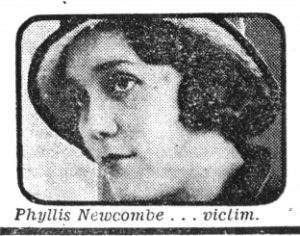
Reader’s Digest,
Mysteries of the Unexplained: How Ordinary Men and Women
Have Experienced the Strange, the Uncanny and the Incredible,
The Reader’s Digest Association, Inc., s.l. 1982.
p.86 (in an SHC case list)
Phyllis Newcombe burst into flames in the middle of
a dance floor on the evening of August 27, 1938, at the Chelmsford
Shire Hall in Chelmsford, England. The 22-year-old girl was wearing
a dress “modeled on an old-fashioned crinoline.” At midnight, just as
she was leaving the dance floor, her dress flared up, and within
seconds she was a blazing mass of blue flames. The young woman’s
fiancé, Henry McAusland, tried valiantly to beat out the flames
with his bare hands, but it was already too late. Phyllis was fatally
burned before the ambulance arrived.
At the inquest the coroner initially surmised that a
light from a cigarette must have set the gown on fire, but the young
woman’s father was able to demonstrate to the court that the dress was
not that flammable. Using a piece from the same material, he showed
that only an open flame would set the cloth on fire and that a cigarette
by itself would not ignite it. Since all the witnesses swore that
no one had used a lighter or struck a match at midnight in the Shire
Hall, the case remained unsolved. (Vincent H. Gaddis, Mysterious
Fires and Lights, p.224; Michael Harrison, Fire From Heaven:
A Study of Spontaneous Combustion in Human Beings, pp.92-93; True,
May 1964, pp.32-33,104-107,112)
Lynn Picknett,
Flights of Fancy? 100 years of paranormal experience,
Ward Lock Ltd, London, 1987.
p.68
The Cinders Syndrome
It seems as if most victims of SHC die alone,
but there have been witnesses to the abrupt visitation
of flame. On 27 August 1938 twenty-two-year-old Phyllis
Newcombe was dancing with her fiancé Henry McAusland
at the Shire Hall ‘hop’, Romford, Essex. At the end of the
dance she was suddenly enveloped in blue flame, which McAusland
tried to beat out with his hands, but ‘within minutes’ she
had turned into ‘a blackened mass of ash’. The crinoline-style
frock she was wearing was blamed at the inquest for being
intrinsically flammable (precise reasons not stated), and the
inevitable accidental brush with a lighted match or cigarette
evoked. The dead girl’s father, however, produced a piece of
material that had been used to make the ball gown and
deliberately applied a lighted cigarette to it. It would not
burn. The coroner admitted: ‘In all my experience I have
never come across a case as mysterious as this.’
Another sick variation on the line: ‘You shall go
to the ball, Cinders’, was the horrendous case of nineteen-year-old
Maybelle Andrews who was dancing with her boyfriend Billy Clifford
in a nightclub in London’s Soho in the 1920s. Flames suddenly burst
from her back, setting fire to her hair. A badly shaken Clifford,
who was himself burnt by trying to beat out the flames, said afterwards
that they seemed to come from within the victim, who died
in the ambulance.
Picknett lists (p.124) Harrison among the ’titles that may whet
your appetite’.
Jenny Randles and Peter Hough,
Spontaneous Human Combustion.
Robert Hale Ltd., London 1992.
p. 175
22-year-old Phyllis was an enthusiastic dancer. On 27 August
1938, she was dancing at the Shire hall, Chelmsford, Essex. As she
was leaving the dance-floor with her fiancé, Henry McAusland, in a
matter of a few seconds her dress turned into a mass of flames. She
was taken to the manager’s office to await an ambulance, but it was
over half an hour before it appeared. The poor girl died from her
horrific injuries.
The dress was modelled on an old-fashioned crinoline, so the
coroner speculated that a lighted cigarette had brushed against it,
setting it on fire. However, her father demonstrated at the inquest
that it was not possible for a cigarette to have set light to the dress
It needed a direct flame.
About twenty years later, there was an almost identical tragedy,
this time in a large public room in Soho, London. 19-year-old
Maybelle Andrews was dancing with her friend, Billy Clifford.
Suddenly, her back, chest and shoulders burst into flames, igniting
p. 176
her hair. Billy and some other men tried to beat out the flames, but
she died on her way to hospital. He later commented: ‘I saw no one
smoking on the dance-floor. There were no candles on the tables
and I did not see her dress catch fire from anything. I know it
sounds incredible, but it appeared to me that the flames burst
outwards, as if they originated within her body.’
p. 199
(in a case list):
53. 27 August 1938 Chelmsford, Essex, England
At midnight, 22-year-old Phyllis Newcombe was leaving the
dance-floor with her fiancé, Henry McAusland, at the Shire Hall,
when her dress suddenly flared up in flames. Henry tried to beat out
p. 200
the flames and burnt his hands. Within minutes the girl was dead.
The coroner thought that perhaps a lighted cigarette had started the
conflagration, but it was demonstrated that a cigarette could not
ignite her dress. (H)
p. 202
68. October Late 1950s Soho, London, England
19-year old Maybelle Andrews was dancing with her boyfriend,
Billy Clifford, when flames erupted from her back, chest and
shoulders, igniting her hair. She died on the way to hospital. Her
boyfriend said there were no naked flames, and the fire seemed to
come from within the girl herself. (H)
Larry E. Arnold,
Ablaze!
The mysterious fires of spontaneous human combustion.
M. Evans and Company, Inc. New York, 1995.
p. 200
As the clock approached midnight on
August 27, 1938, the fire again
appeared in public. In a very public place –
the Chelsmford Shire Hall in south-east
England. Young and pretty Phyllis
Newcombe, twenty-two, was whirling
and twirling on the floor at the weekly
Saturday dance with her fiancé, Henry
McAusland, when she dance-stepped into
combustion Phyllis screamed. Blue
flames were swirling around her body.
In horror, everyone screamed. The
unnerved McAusland tried to beat out the
flames bare-handed. All attempts to
rescue his fiancée failed, and ”in
minutes she was ashes, unrecognizable as a
human being.”
The Essex Chronicle (September 2, 1938)
had this story first, one that didn’t
spread like wild fire through the British
press. London’s Daily Telegraph picked
up the story on September 20, when it
chronicled the coroner’s court proceedings.
Ironically, testimony began
with a plea for an ambulance to serve the
city of twenty-five thousand: it had
taken the ambulance from a nearby brigade
thirty-five minutes to arrive at the dance
hall – as if a more timely response
would have saved the poor girl. Not!
McAusland testified Miss Newcombe’s
dress and body ignited ”in seconds”
and that no ambulance could have gotten
there quickly enough.
What material was her dress? asked
Coroner L.F. Beecles. [sic] ”A frock modelled
on an old-fashioned crinoline” came
the answer. Why, crinoline will burn! He
thus declared ”the tragic results that
we have heard” were caused by a dropped
cigarette, which caused the dress (and not
Miss Newcombe) to inflame.
Fortunately for justice, Miss Newcombe’s
father had a more inquiring mind
than the coroner first demonstrated.
Mr. Newcombe produced a swatch of
fabric from which his daughter’s dress
had been cut. It would burn when lit by
a lighter, he showed; but lighted cigarettes
failed to produce the same, expected
result. Coroner Beecles now had to admit,
”From all my experience, I have
never come across a case so very mysterious
as this.”
A case that became even more mysterious,
if possible. The Essex Weekly
News (September 1938) also covered this
fantastic story, though it appeared to
be a wholly different story. The News
had Miss Newcombe ”descending the
staircase and on discovering that her dress
was alight rushed screaming up the
stairs. Her dress immediately burst into
flames and at the entrance to the ball-
page 201
room she collapsed.” On-lookers smothered
the fire, limiting its damage ”to
her legs and body.” Many days later, she
died in the hospital of ”hypostatic
pneumonia and toxaemia secondary to
burns.” In the News‘ version, the coroner
admits this was his oddest case, then
appends this: ”Obviously this is not
spontaneous combustion.”
October 1938; a nightclub in Soho,
the London district famed for its
nightlife. Nightlife became nighthorror,
then nightdeath for Maybelle Andrews,
a nineteen-year-old out of town with
Billy Clifford. In midstep with Billy
on the dance floor, she erupted in
flames … flames shooting from her back,
chest, shoulders and hair. She died
moments later. According to a personal
communication from journalist Michael
Harrison, the inquest was conducted
by Coroner James F. Duncan, who
concluded: ”in all my experience I have
never been confronted by a case as fantastic
as this. I can find no logical explanation
whatever as to why the deceased’s clothing
and hair caught fire.
Perhaps had His Majesty’s Coroner
known about the long history of SHC,
he would have found the logical –
though no less fantastic – explanation
he sought.
On December 26, 1938; Ballina, Ireland.
James Duncan, seventy-six, a nonsmoker
and not near any observed fire,
became a pillar of flame in his bedroom.
…
Nigel Blundell,
Fact or Fiction? Supernatural,
Sunburst Books, London, 1996.
p.12
That same year 22-year-old Phyllis Newcombe was leaving a dance
hall at Chelmsford, Essex, when blue flames suddenly engulfed her
body and she was reduced to a pile of ashes within minutes. ‘In all
my experience I have never come across anything as remarkable as
this,’ admitted a baffled coroner.
In a similar case, 19-year-old Maybelle Andrews was dancing
with her boyfriend at a club in London’s Soho when flames shot from her
chest and back. ‘The flames seemed to come from within her
body,’ said her tearful boyfriend. Other dancers failed to beat
them out and within minutes she was dead.